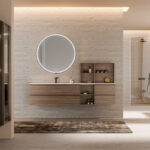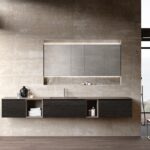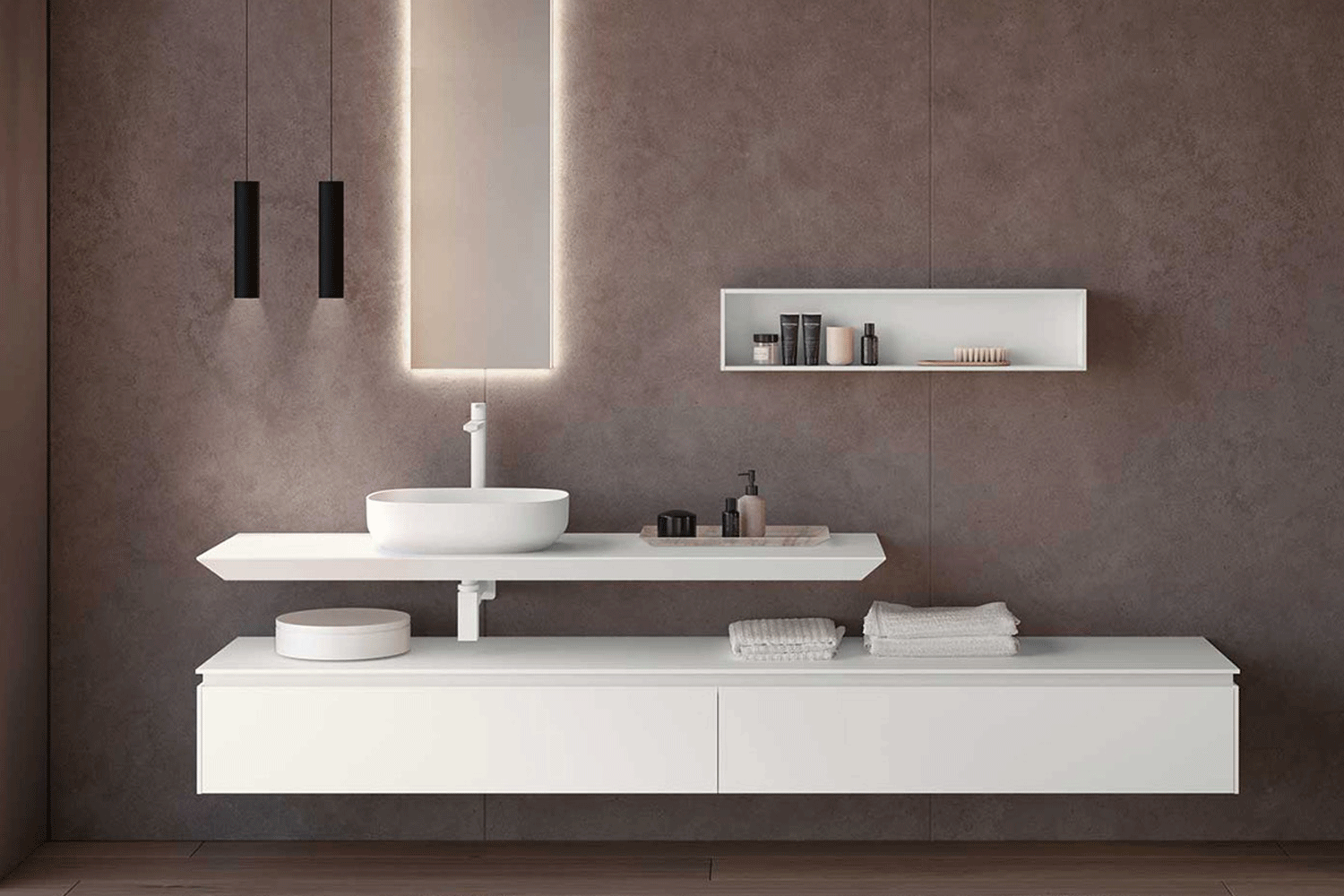
A windowless bathroom can present an interesting design challenge. The lack of natural light, in fact, risks making the room feel smaller and less airy, especially when it is already compact. With the right choices, however, this limitation can be turned into an opportunity to design a welcoming, functional and atmospheric space.
Colours, reflective surfaces and, above all, lighting become key design tools in this context. It is not simply a matter of ‘adding more light’, but of striking a balance that lends depth to the space, enhances the furnishings and provides the right lighting for various daily activities.
So let’s look at how to furnish a windowless bathroom, focusing on three key aspects: the colour palette, the choice of mirror and lighting design.
Which colours to choose for a windowless bathroom
When natural light is lacking, the first solution that often springs to mind is white. This is certainly an effective choice, but it is not the only one.
In a small windowless bathroom, light colours help to reflect artificial light more effectively and can help make the space feel more open. As well as white, you can therefore use warm neutrals, shades of sand, beige, jute, dove grey, ash and soft stone-inspired hues.
Compared to a very cool white, these colour palettes allow you to maintain good brightness without making the space feel impersonal. They are also easy to combine with wood finishes, stone-effect surfaces and textured finishes, creating a warmer and more welcoming bathroom.
Using textures to add depth
In the absence of a window, materials can also help to make the space feel more dynamic.
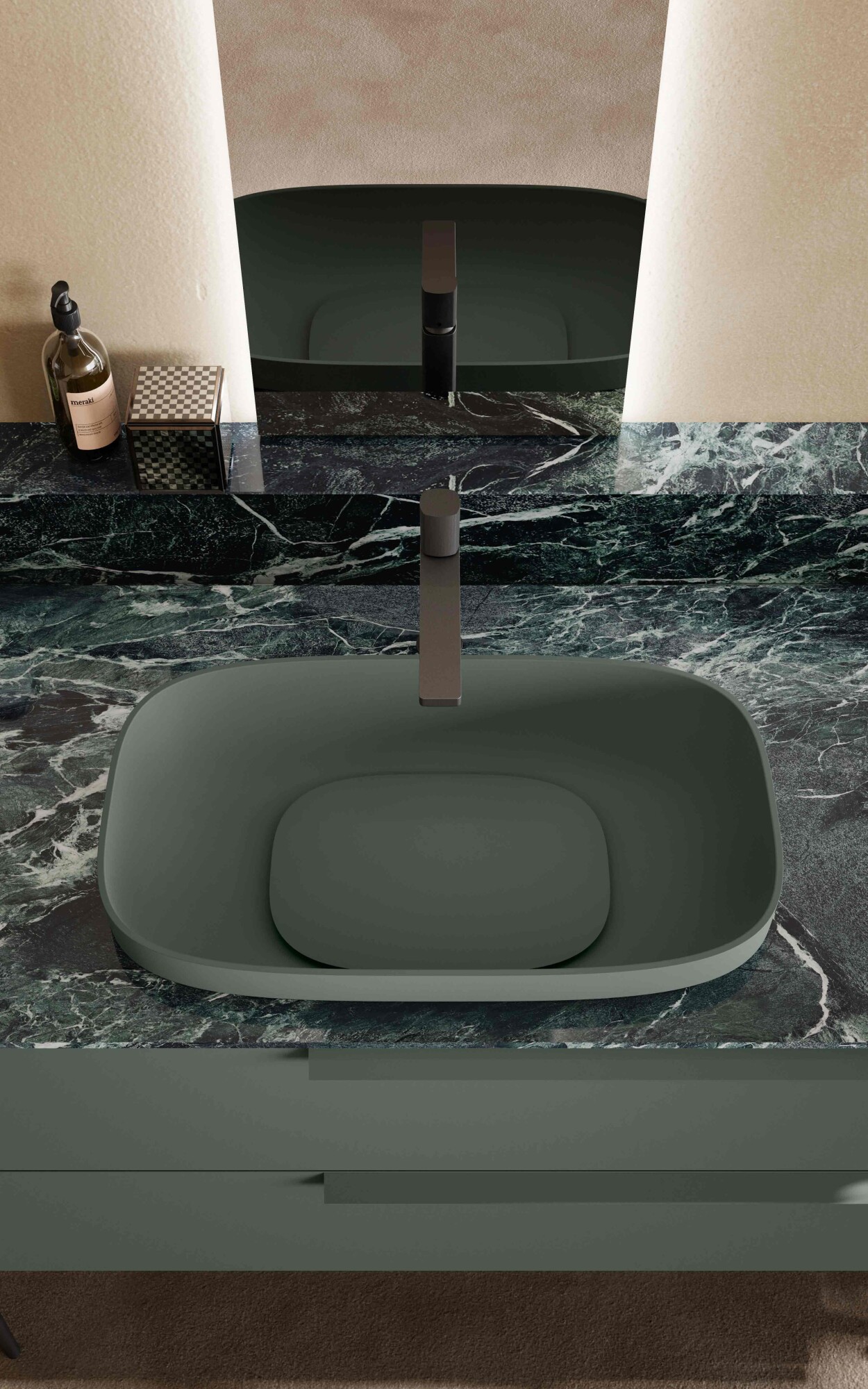
Completely uniform surfaces can, in fact, accentuate the feeling of a closed-off space. Incorporating textures, veining, reliefs and three-dimensional effects, on the other hand, allows artificial light to interact with the surfaces, creating subtle play of light and shadow and perceptual variations.
The Azzurra collections offer numerous possibilities in this regard: from 3D decorative tiles to wood-effect finishes, from Canneté surfaces to stone-effect stoneware used for worktops.
The advice is not to overload the space, especially when it is small. It may be enough to choose a single standout textural element and pair it with simpler surfaces, allowing the light to highlight its texture.
The mirror: an essential ally
Whilst the mirror is already an important element in a traditional bathroom, it takes on an even more strategic role in a windowless bathroom.
A large mirrored surface helps to reflect artificial light and visually expand the perception of space. In a small bathroom, it can be effective to choose a horizontally oriented mirror, whilst a vertical element can draw the eye upwards and lend greater height to the wall.
You do not necessarily have to be limited by the dimensions of the vanity unit: where the design allows, a more generous mirrored surface can become a true architectural feature.
The Azzurra range includes mirrors in various shapes (rectangular, round, oval or custom-shaped), allowing you to choose the proportions best suited to your bathroom’s layout.
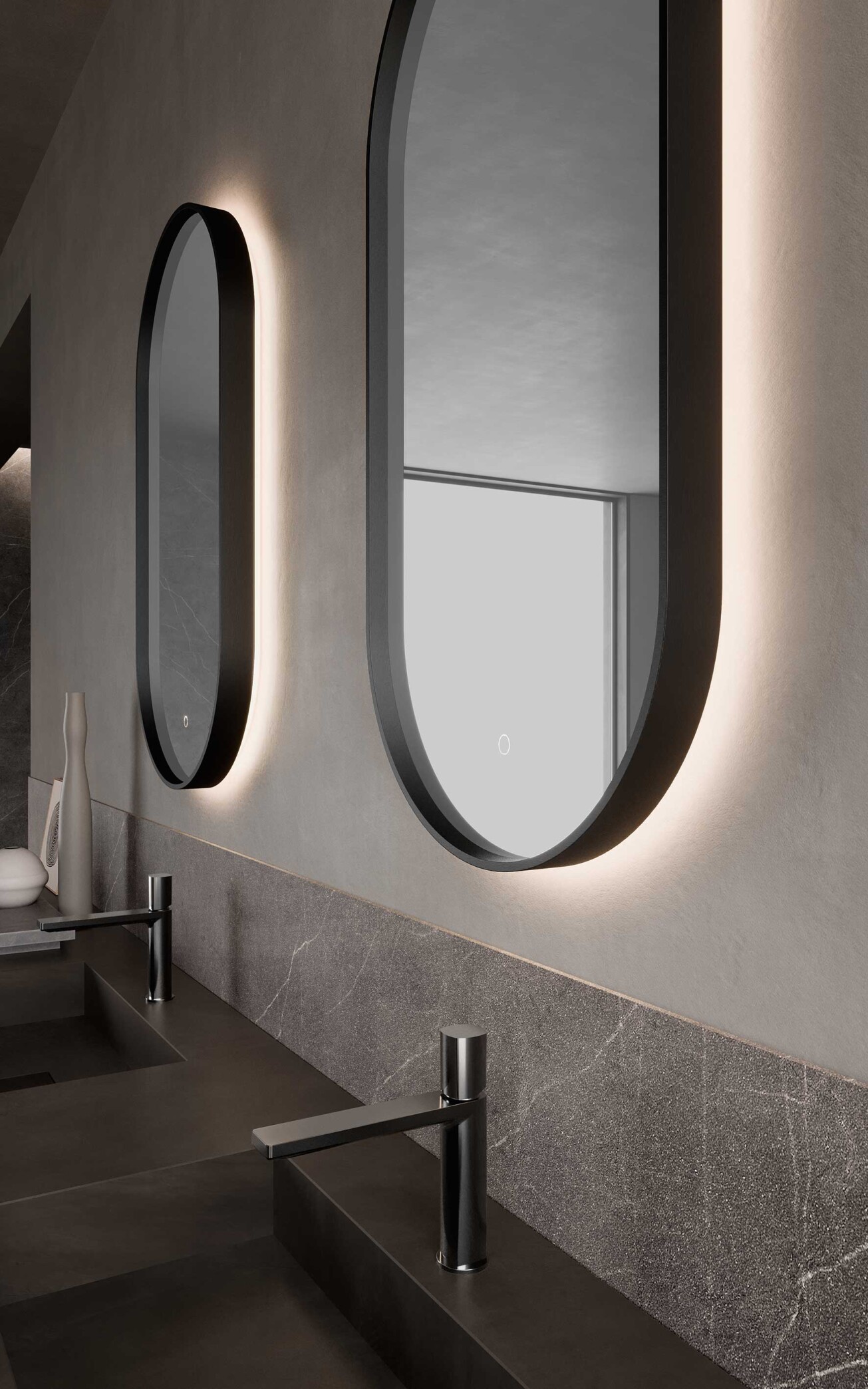
Illuminated mirrors: light and reflection work together
In a bathroom lacking natural light, a mirror with integrated LED lighting can fulfil several functions at once.
On the one hand, it ensures the washbasin area is properly lit, which is essential for daily activities such as applying make-up, beauty routines, shaving and personal care. On the other hand, the reflected light helps to brighten the entire wall and enhance the sense of depth.
The Azzurra collections feature a range of backlit mirrors and models with integrated technological features. Depending on the solution chosen, you can find features such as adjustable light intensity, the ability to switch between warm, natural and cool colour temperatures, touch controls and an anti-fog function.
The latter can be particularly useful in a windowless room, where there is no natural air circulation and humidity control must be managed by the ventilation systems included in the design.
How to light a windowless bathroom correctly
The key consideration when designing a windowless bathroom is probably artificial lighting.
Relying on a single central light source rarely yields the best result. A single source tends to create uniform but poorly defined lighting and can cast shadows precisely where greater visibility is needed.
It is preferable to work with multiple levels of lighting.
- The first is general lighting, which must ensure even brightness throughout the entire room.
- The second is functional lighting, concentrated mainly around the washbasin and mirror area. Here, it is important to have light that is well distributed across the face and free from overly pronounced shadows.
- The third level is accent lighting, used to highlight furniture, fitted wall units, recesses, textures or architectural details.
It is precisely the combination of these levels that prevents the room from looking flat and gives the bathroom greater depth.
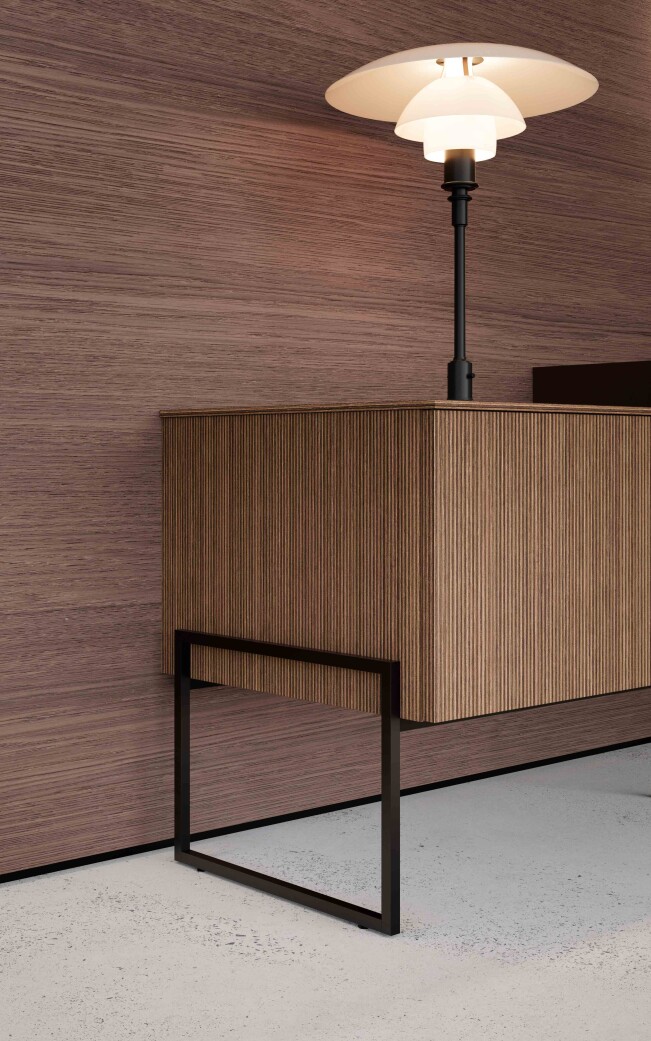
LEDs integrated into the furniture to enhance depth
Lighting can also become an integral part of the furniture.
In Azzurra’s designs, LEDs can be incorporated not only into mirrors but also into other elements of the unit. The Wally system, for example, can incorporate lighting on the splashback, beneath the wall units or along the unit, creating subtle lines of light that emphasise the wall’s architecture.
Wall-mounted units and tall units can also be highlighted using dedicated light fittings, whilst freestanding LED lamps allow you to complete the lighting design.
In a windowless bathroom, these solutions are particularly effective as they allow light to be directed to multiple points, preventing certain parts of the room from feeling too enclosed.
Warm, natural or cool light?
The colour temperature of the light also has a significant impact on how the bathroom is perceived.
Warmer light helps to create a cosy and relaxing atmosphere, whilst a more neutral tone is particularly suitable for everyday activities and for seeing colours and finishes more accurately. Cooler light, on the other hand, can create a particularly crisp and bright impression.
The most versatile solution is to be able to adapt the lighting to different times of the day. Some Azzurra mirrors allow you to adjust both the colour temperature and light intensity via built-in controls, switching from a more functional light to a softer, more atmospheric one.
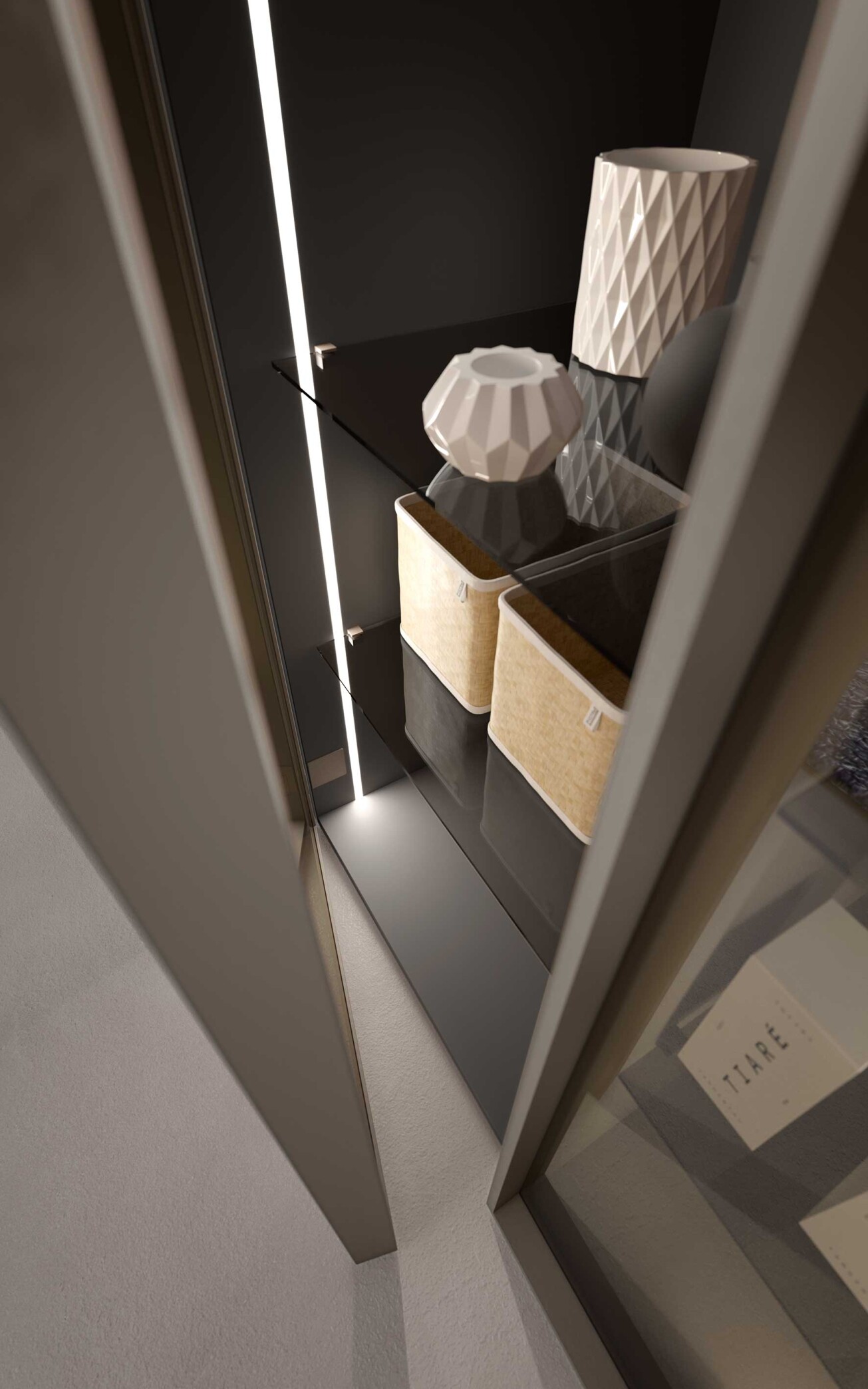
A windowless bathroom designed through light
Furnishing a windowless bathroom therefore means paying even closer attention to the relationship between colour, materials, reflections and lighting.
There is no rule that necessarily dictates completely white surfaces or an extremely bright space. You can choose a light colour palette to visually expand the space, or enhance the room’s more intimate character with deep colours. In both cases, mirrors and light become the key elements in achieving the right balance.
A well-proportioned mirror, multiple levels of lighting and LED spotlights integrated into the fittings can transform the lack of natural light from a design constraint into an opportunity to create a space with a distinct character.
Because even a windowless bathroom can be bright, welcoming and personal: what matters is designing the lighting with the same care given to furniture, materials and colours.