The washbasin is one of the elements that most characterise the bathroom. Its shape, material and relationship with the worktop all help to define the aesthetics of the entire layout. Among the most common options, the choice between a countertop washbasin and a built-in one results in two different ways of interpreting this space: in the first case, the washbasin protrudes from the worktop and retains its own independence, offering greater freedom in combining shapes, colours and materials; in the second, it becomes part of the worktop, creating a more seamless surface.
The difference is therefore not merely aesthetic. The dimensions of the unit, the space available on the worktop, the position of the basin and ease of cleaning are factors that tangibly affect the end result and are well worth considering before making a choice.
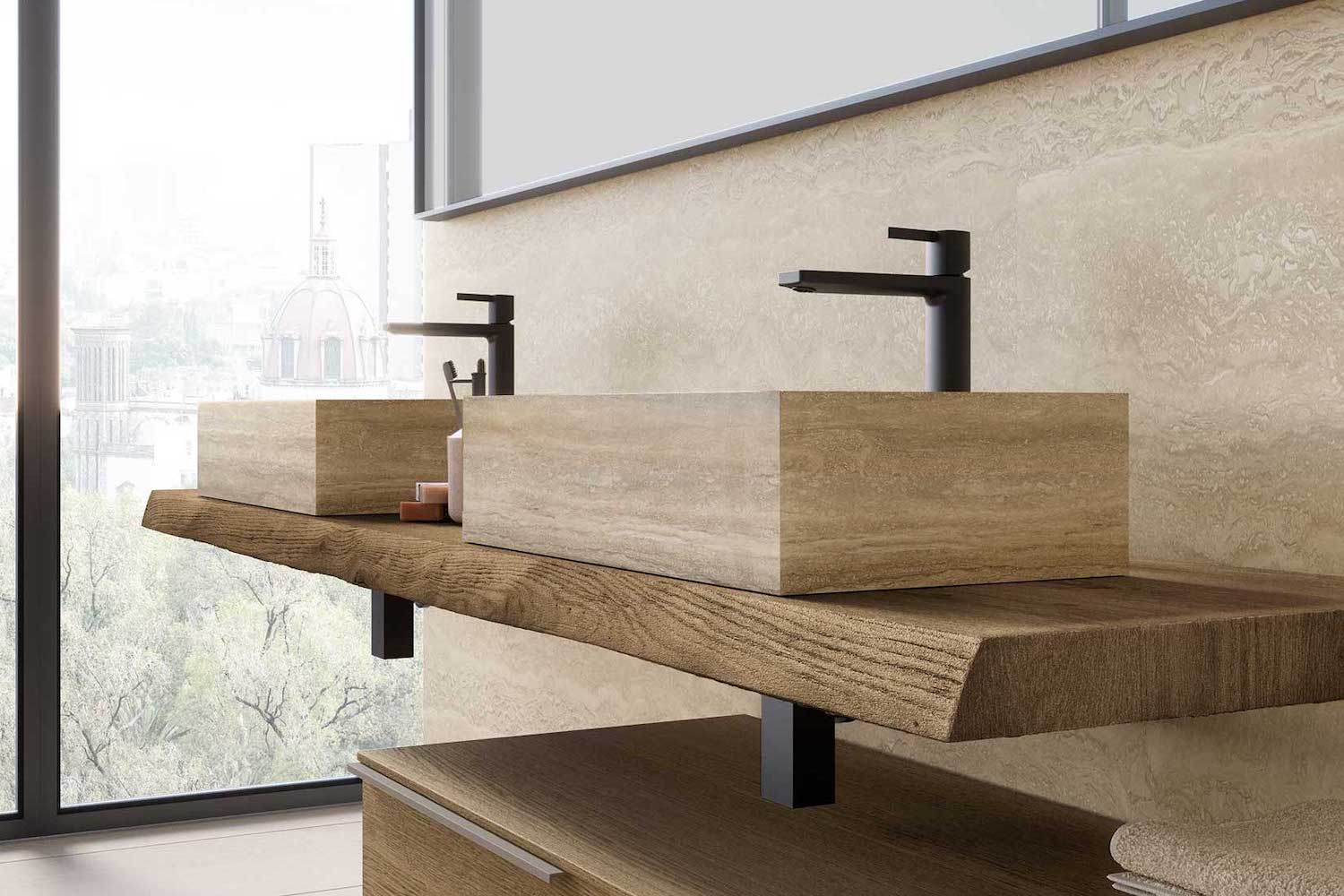
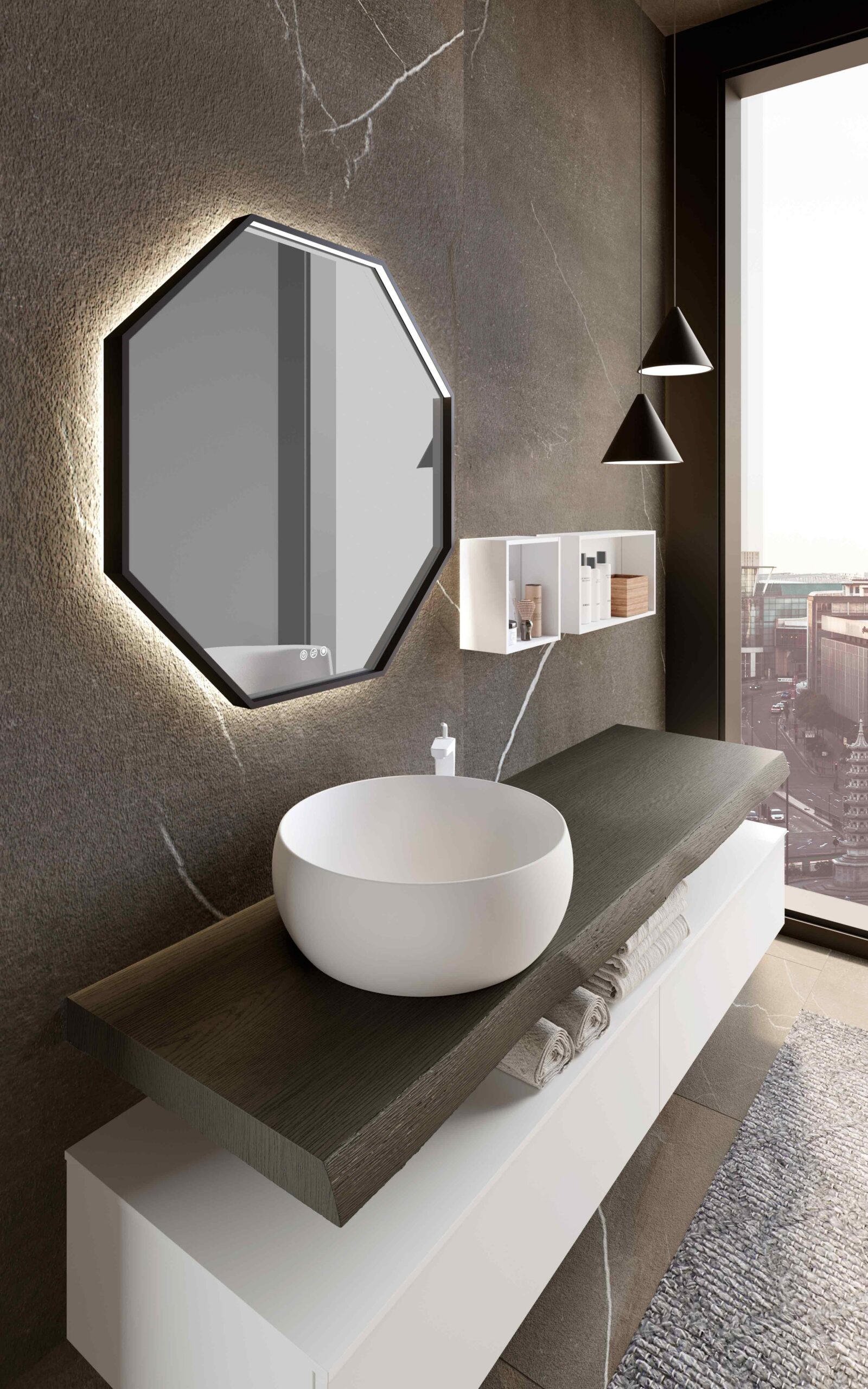
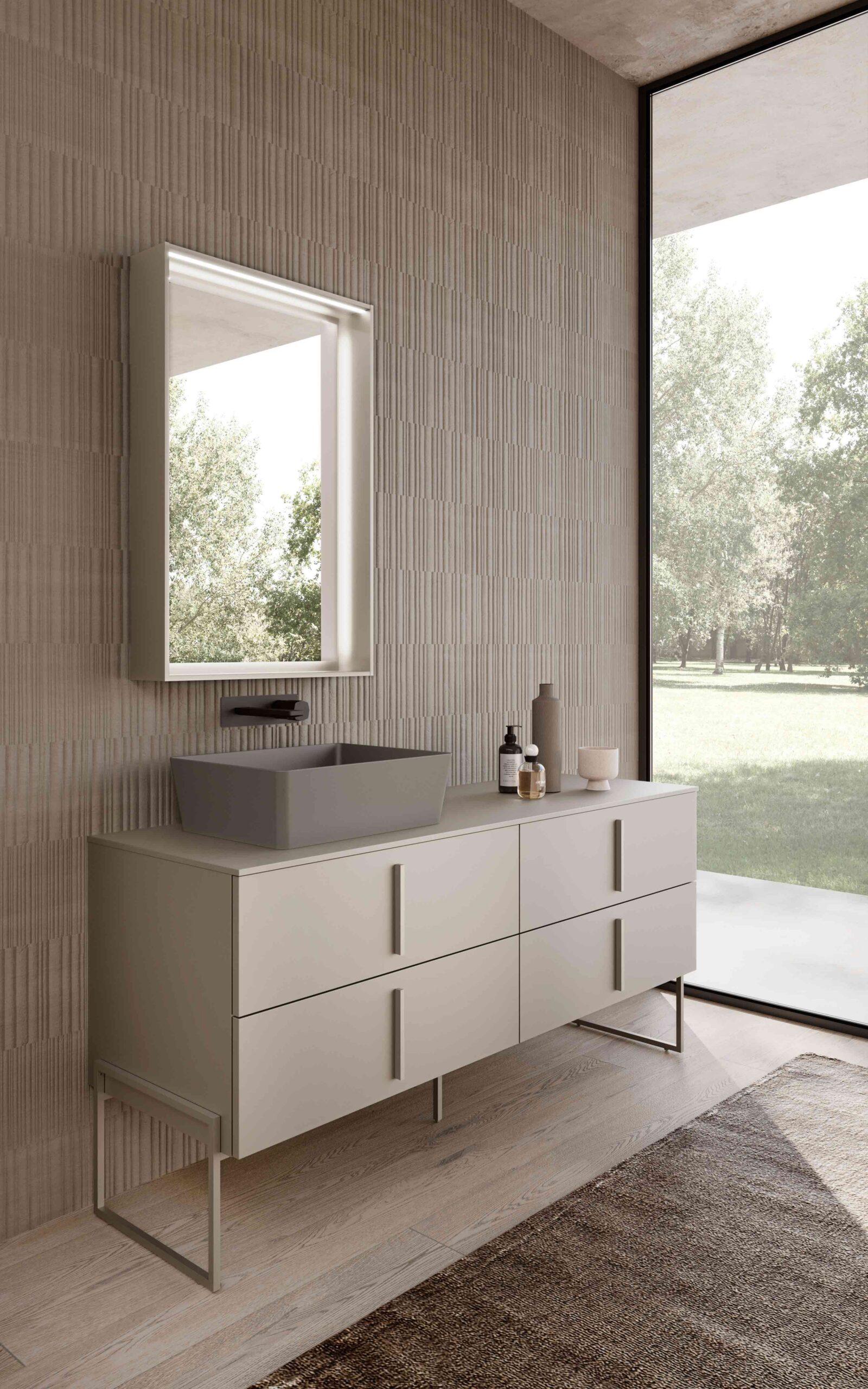
Countertop washbasin: maximum freedom of customisation
A countertop washbasin is a basin positioned on top of the worktop and, for this very reason, retains its own distinct identity within the overall design. This feature allows for great freedom in choosing shape, colour and material.
A washbasin with rounded lines can soften the more austere geometry of the unit, whilst a square washbasin can emphasise its design. The relationship with the worktop also offers various possibilities: the two elements can share similar shades or differ in colour, material or finish, creating contrasts of varying intensity.
It does not necessarily have to be the washbasin that attracts all the attention. The distinction between the two elements allows you to highlight the basin, emphasise the worktop or create a balance between the two. It is precisely this flexibility in combination that makes the countertop washbasin particularly suitable for those seeking a highly customisable bathroom area.
Integrated washbasin: continuity between the bath and the worktop
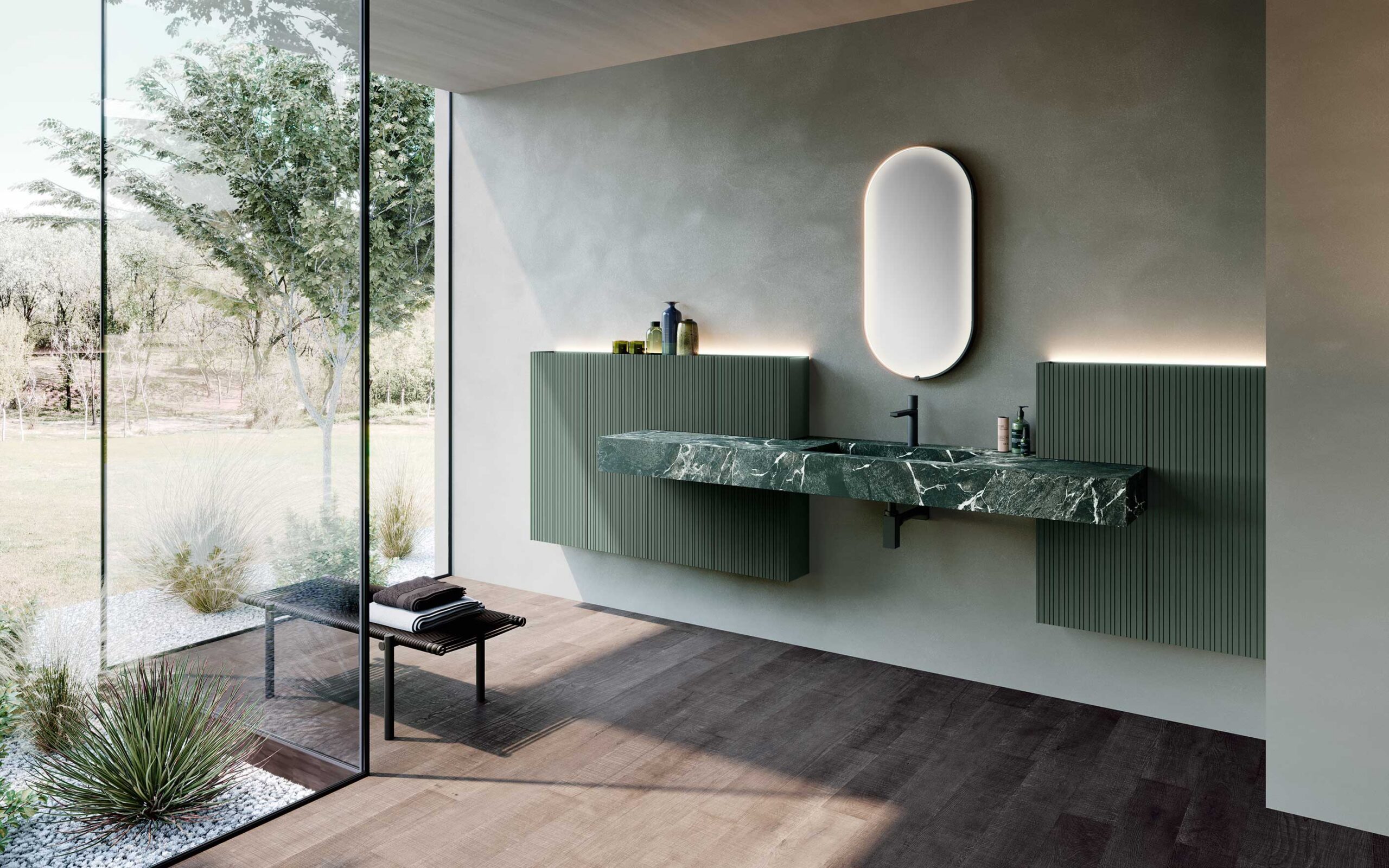
In an integrated washbasin, the bath and worktop are perceived as parts of a single surface. The visual separation is reduced and the washbasin becomes part of the worktop’s overall design, giving the composition a more seamless appearance.
This feature can be utilised in various ways. Where the surface has a distinct texture, with visible grain or patterns, the integrated design allows the material and its continuity to be showcased. With more uniform colours and finishes, on the other hand, the washbasin can take on a more discreet presence and leave more visual space for other elements, such as the cabinet, taps, mirror or wall tiles.
Choosing a built-in washbasin does not therefore necessarily result in a minimalist look: rather, it is a different way of establishing hierarchies within the composition.
Countertop or integrated washbasin: what to consider when choosing
Once you have identified the desired aesthetic result, certain design aspects come into play that directly affect day-to-day use. Space, the position of the washbasin and maintenance help you to understand which configuration is best suited to your bathroom.
Space and dimensions of the washbasin area
Rather than the bathroom’s overall dimensions, it is useful to start with those of the washbasin area: the width of the unit, the depth of the worktop, the size of the basin and the amount of space you wish to leave free.
With a countertop washbasin, the basin occupies a clearly defined portion of the worktop. A compact solution can leave space for everyday items, whilst a wider washbasin will have a greater presence and reduce the available surface area. The height of the basin must also be considered alongside that of the vanity unit to achieve a comfortable overall height.
With a built-in washbasin, on the other hand, the basin and worktop are designed as a single unit. It is therefore important to assess the relationship between the size of the interior space and the surrounding area, deciding how much space to allocate to each.
Symmetry and asymmetry in the layout
The position of the basin can significantly alter both the appearance and the layout of the worktop. A central washbasin creates a more symmetrical and regular composition, whilst an off-centre solution introduces asymmetry and can leave a larger free area on one side.
It is therefore not merely a question of style. Moving the washbasin also means deciding where and how much countertop space to have available, adapting the layout to suit your own habits.
The Azzurra ranges showcase various interpretations of this relationship between aesthetics and function, from off-centre solutions to more symmetrical configurations, right through to larger units featuring twin washbasins.
Daily cleaning and maintenance
The configuration of the washbasin also influences day-to-day use. In the integrated model, the seamless transition between the basin and the worktop reduces the number of joints and makes it easier to move from one surface to another whilst cleaning.
With a countertop washbasin, you must also consider the space around the base of the basin: the greater the distance from the edges or surrounding elements, the easier it is to access the surface. However, the material and finish affect the maintenance of both solutions and should therefore be assessed alongside the type of washbasin.
The best choice for your bathroom
There is no one-size-fits-all answer for every bathroom. A countertop washbasin offers a wide range of combination possibilities and allows you to experiment with shapes and contrasts; an integrated washbasin, on the other hand, creates a more seamless relationship with the worktop, which can highlight the material or allow other elements to take centre stage.
The choice becomes simpler when, in addition to aesthetics, you consider the practical layout: how large the worktop is, how much surface area you want to leave free, where it makes sense to position the bath, and how you will use that space on a daily basis. It is these considerations that allow the washbasin to fit into a bathroom design conceived as a whole, where aesthetics, proportions and everyday functionality strike the right balance.