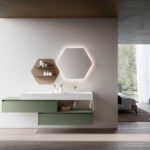
In the contemporary bathroom, design is no longer limited to organizing volumes, functions, and pathways. Increasingly, it also seeks to create a sensory relationship with the space, working with light, materials, and the tactile perception of surfaces. It is within this context that one of the most interesting trends in interior design emerges: furnishing the bathroom with textures and materials that offer diverse tactile experiences.
In recent years, the industry has seen a shift away from a colder, more uniform minimalism toward warmer, layered, and textured interiors, where texture plays a central role in creating the atmosphere.
Why texture has become so important in the bathroom
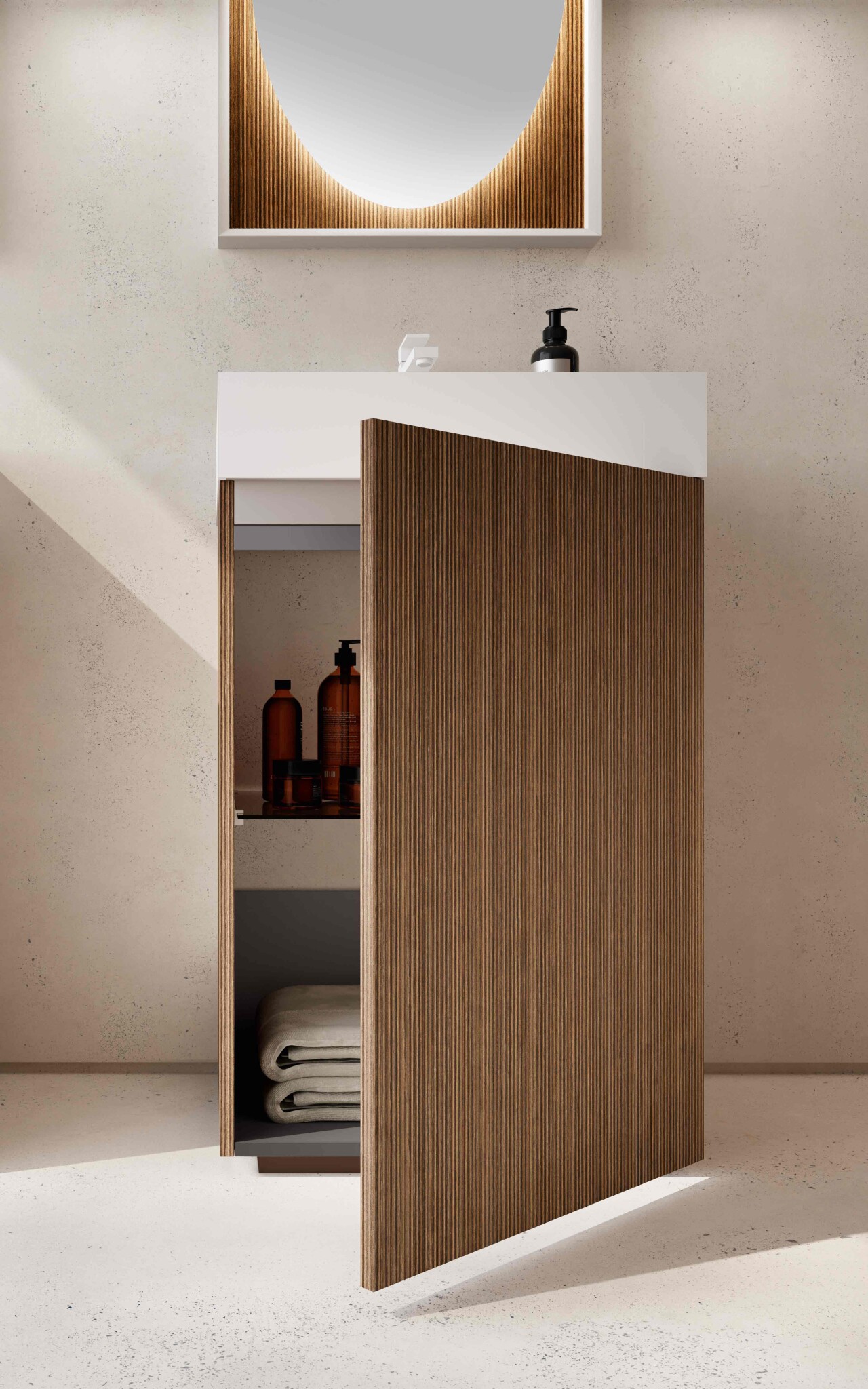
The bathroom is one of the rooms in the home where contact with materials is most direct. Here, surfaces are not merely observed: they are touched, encountered in daily routines, and accompany gestures related to personal care and well-being. For this reason, finishes cannot be conceived solely in terms of color or composition. They must also convey warmth, depth, rhythm, and presence.
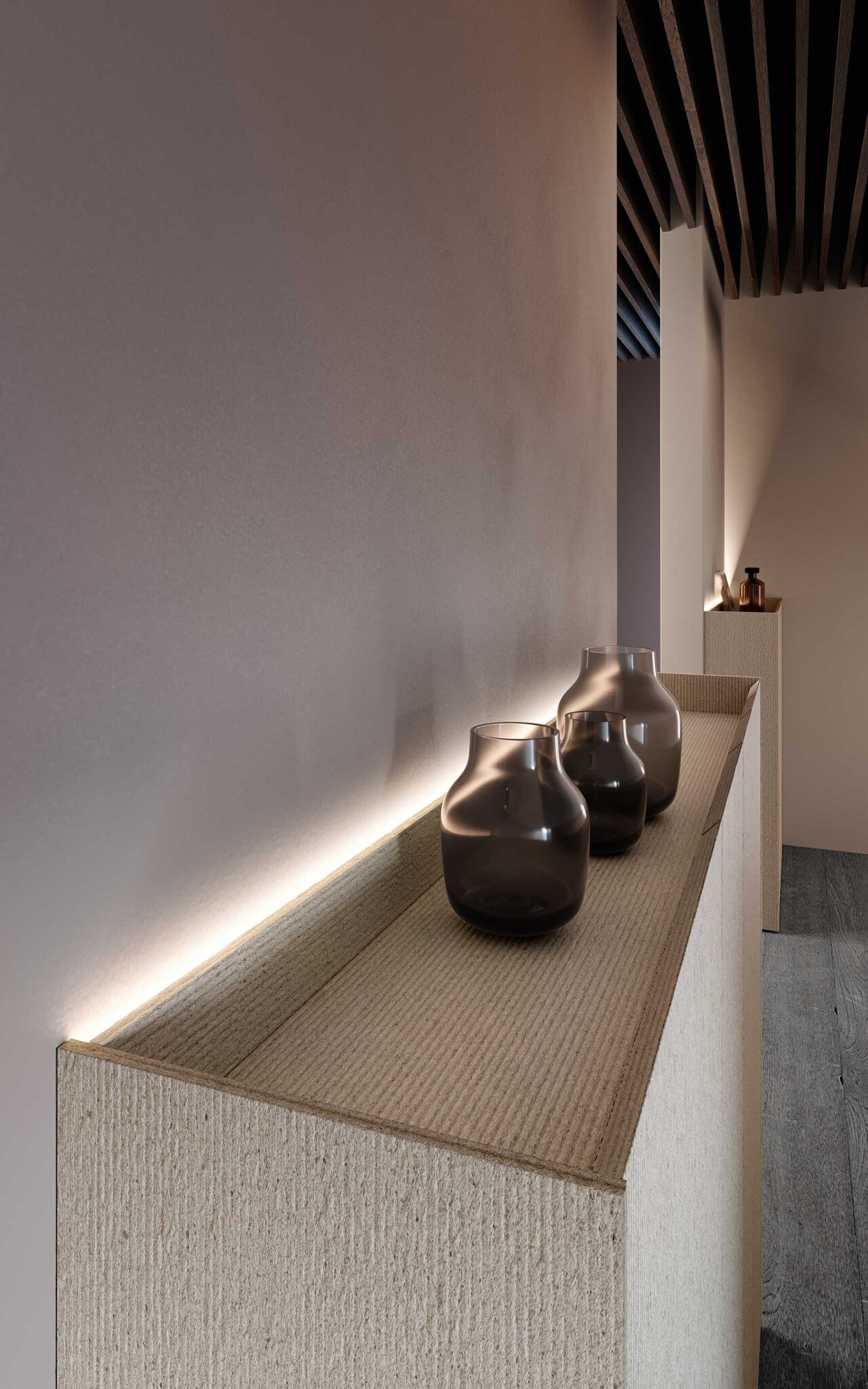
Tactile surfaces help avoid a flat, impersonal effect. A ribbed front panel, a wood-effect finish, a stone-inspired surface, a thick countertop, or a carved edge introduce a richer, more immersive experience into the bathroom. In particular, in more understated bathrooms or in designs featuring neutral palettes, it is precisely this tactile variation that gives the space its identity.
Material and texture: the bathroom becomes more architectural
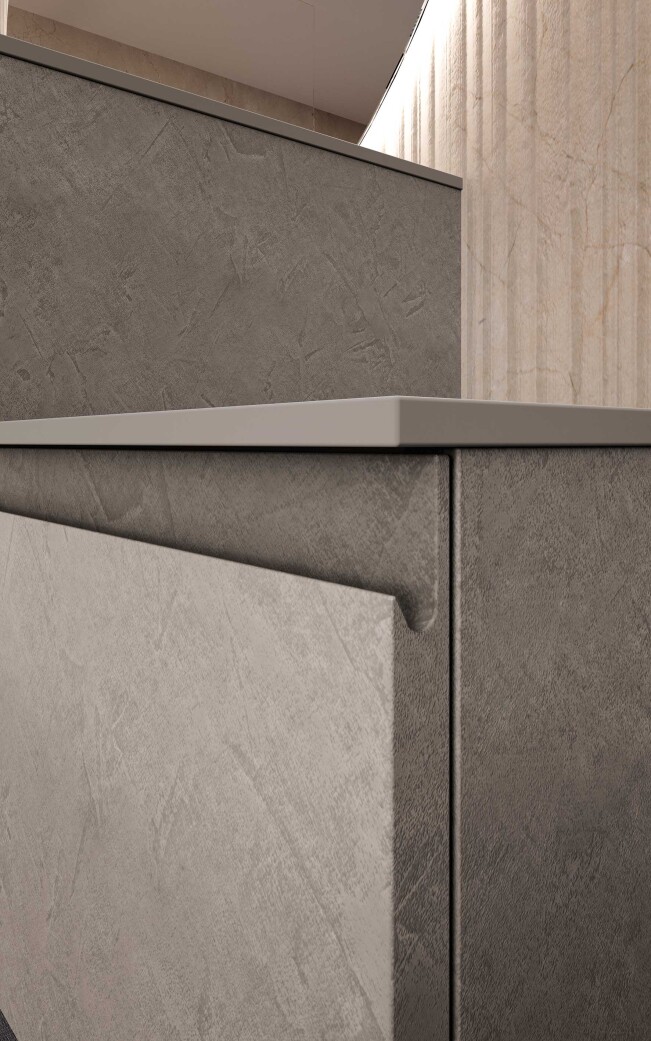
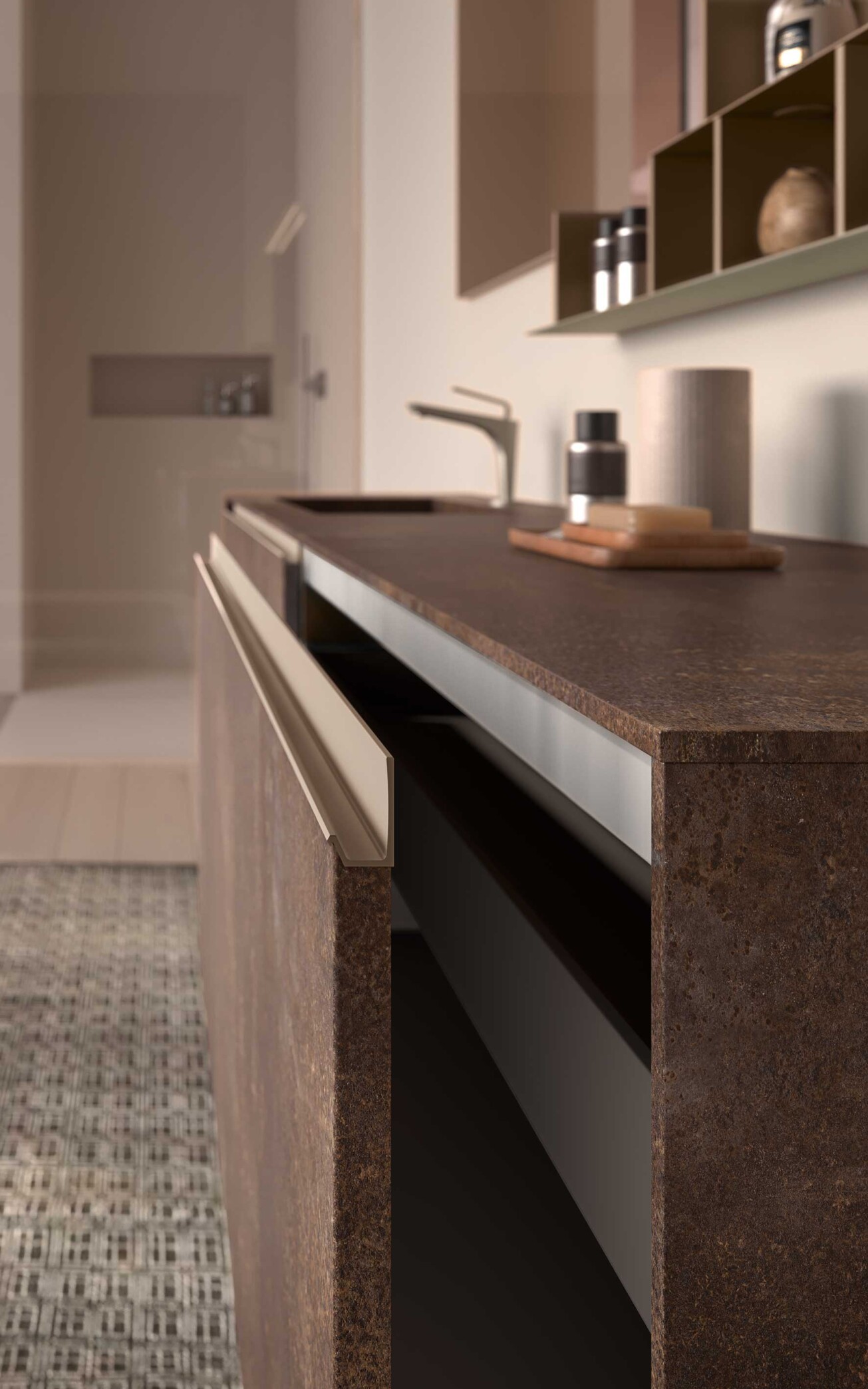
One of the most interesting aspects of this trend is the way texture transforms the bathroom into a more architectural space. Surfaces are no longer mere coverings, but elements that play with light and shadow, create visual rhythm, accentuate volumes, and add depth to the composition.
This approach is very evident in Azzurra’s catalogs. The collections focus on a wide variety of materials and finishes precisely to allow for the free expression of the bathroom environment. In this context, the material is not a decorative detail, but an essential part of the design.
Canneté and Rigatino: the value of rhythm
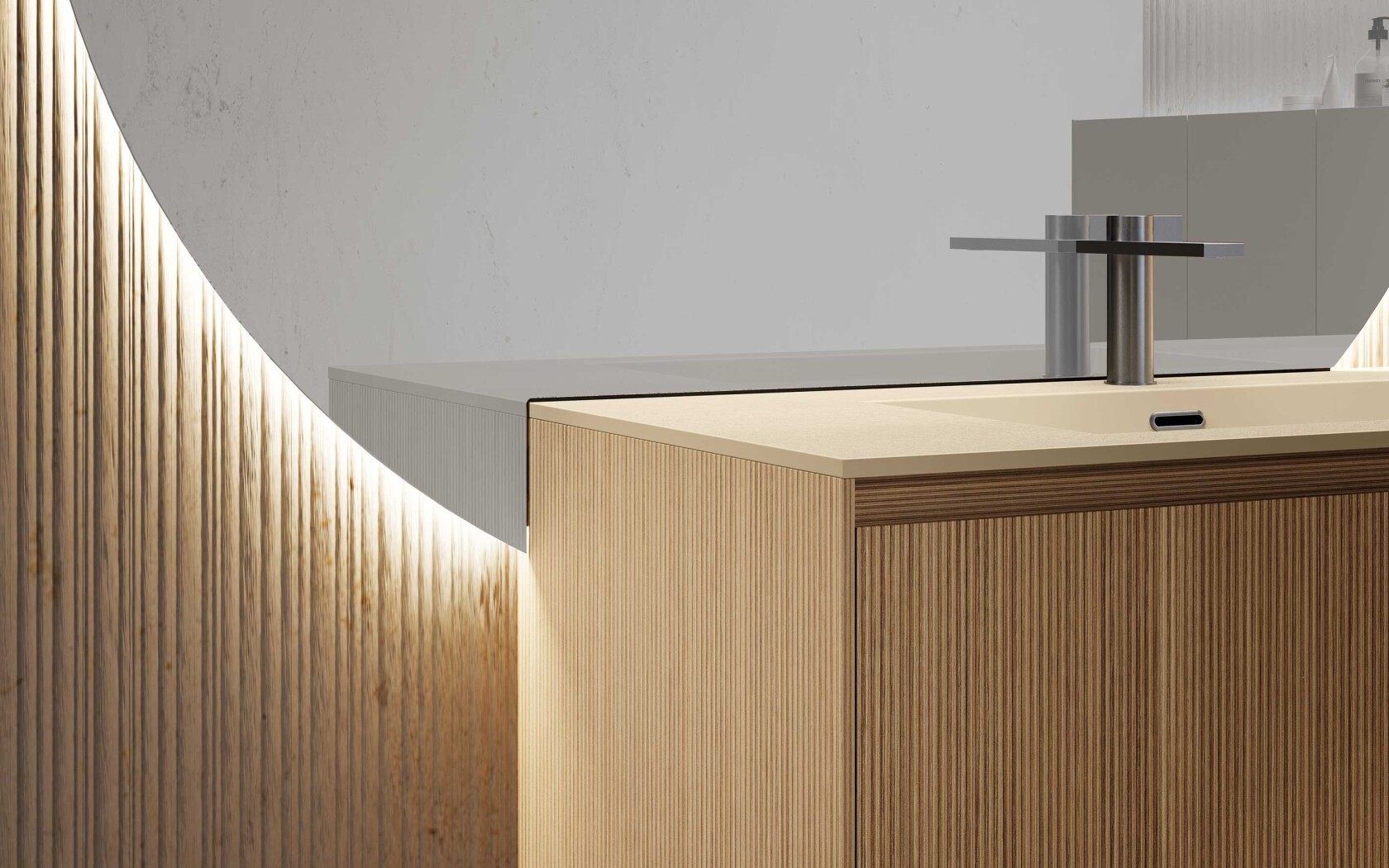
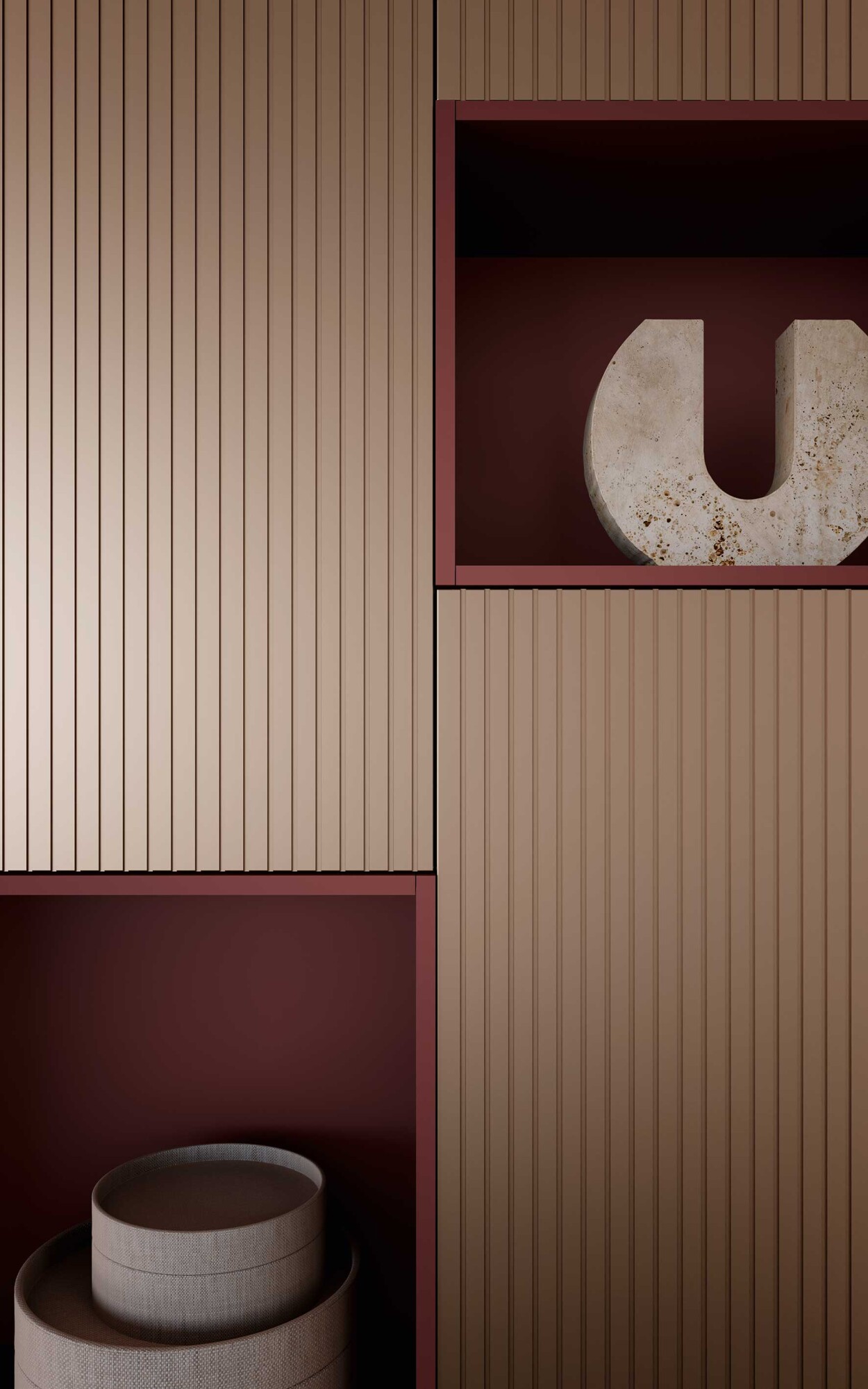
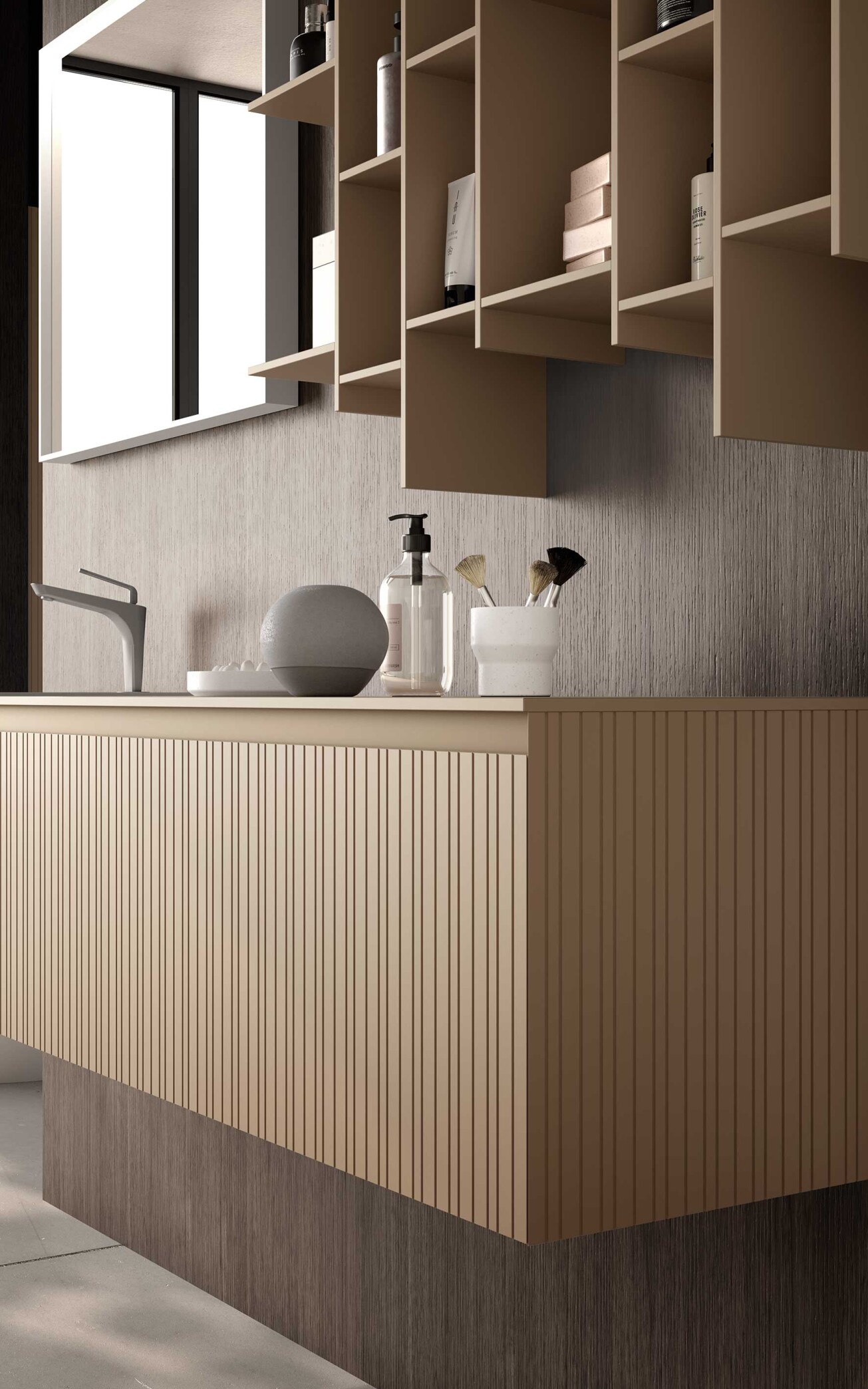
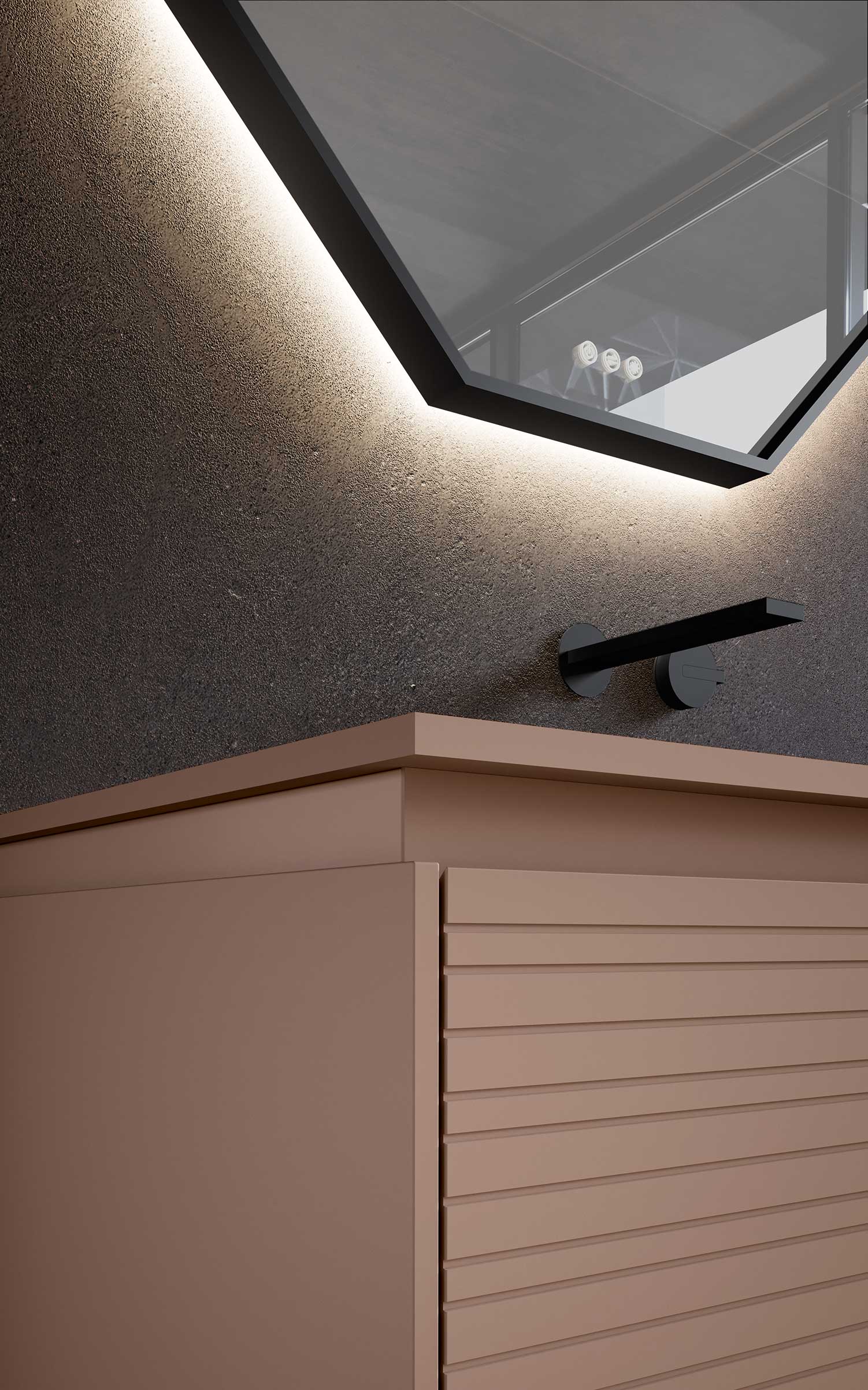
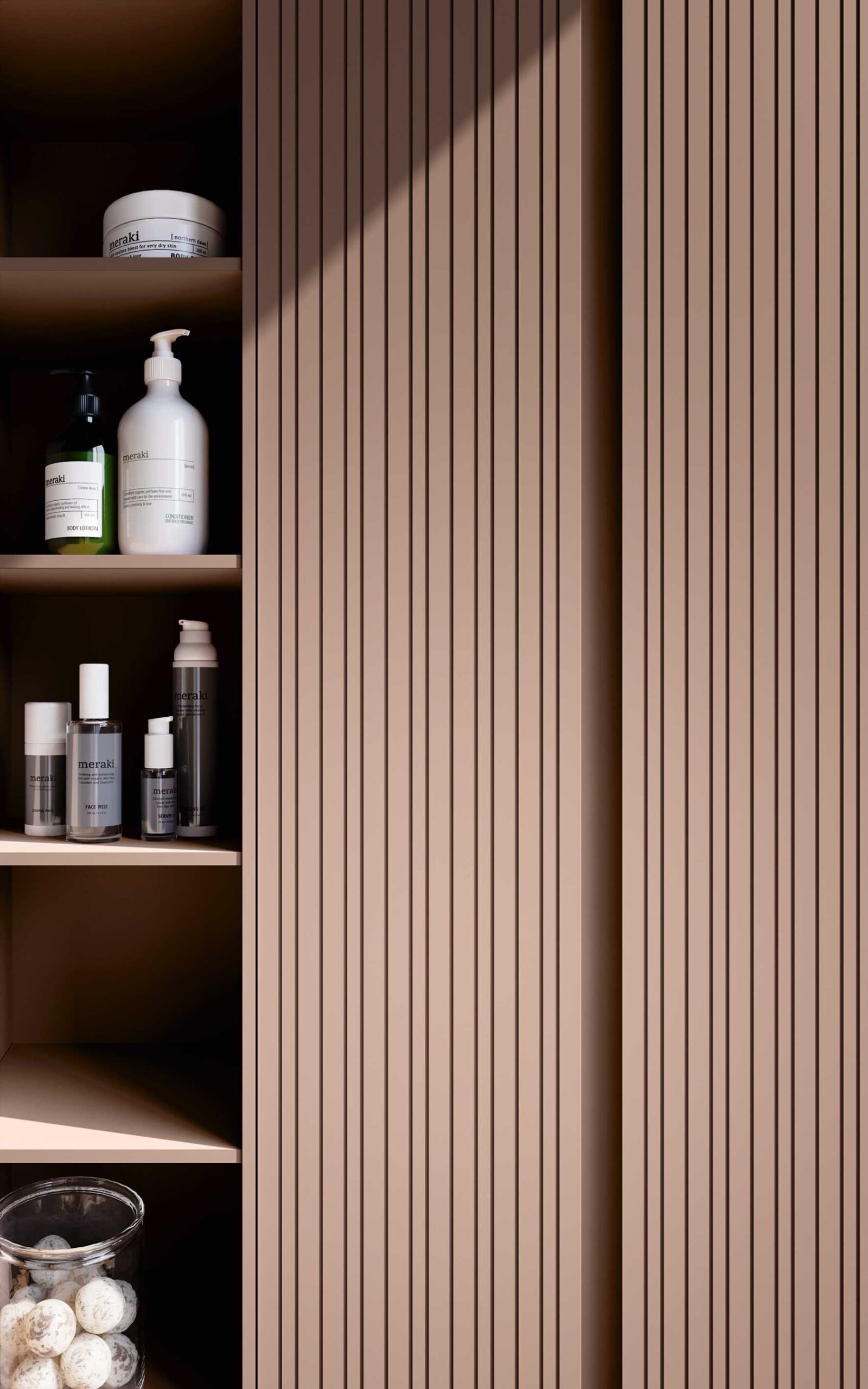
Among the most representative solutions of this trend are undoubtedly the Canneté and Rigatino surfaces offered by Azzurra. In the case of Canneté, it is possible to customize vanities and tall cabinets through a play of symmetrical or asymmetrical, vertical or horizontal lines, capable of radically changing the final aesthetic effect.
This type of surface has great design value because it introduces a rhythm perceptible both to the eye and to the touch. Light flows differently across a striped surface, creating soft shadows, chiaroscuro, and subtle vibrations that make the bathroom more dynamic. It is an ideal solution for those seeking a refined and dynamic space.
Rigatino also works in this direction, especially when applied to large surfaces or coordinated with countertops, wall cabinets, and tall cabinets. The result is a bathroom that appears more sophisticated, more engaging, and more attentive to the relationship between material and light.
Stone effect, wood effect, continuous surfaces
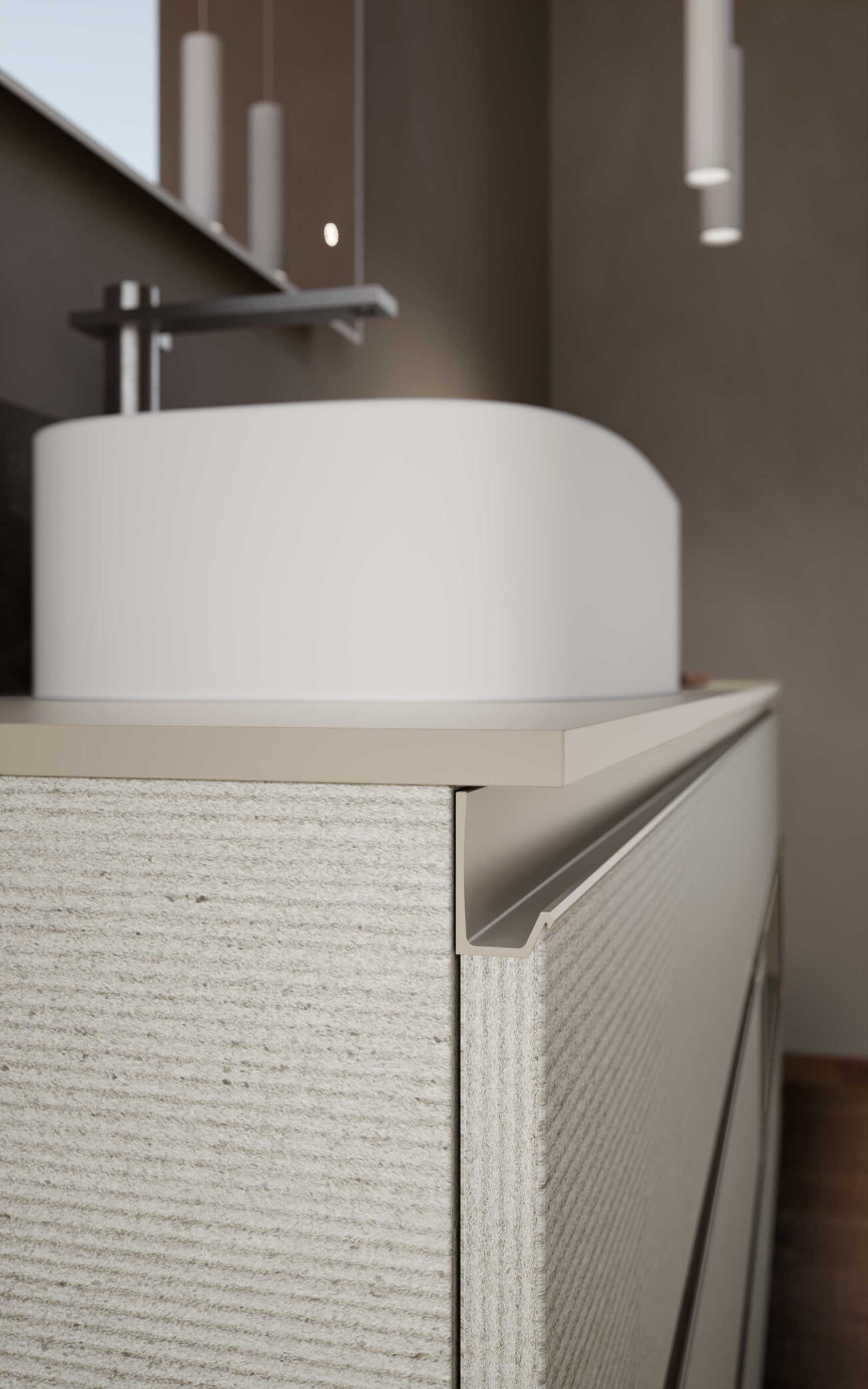
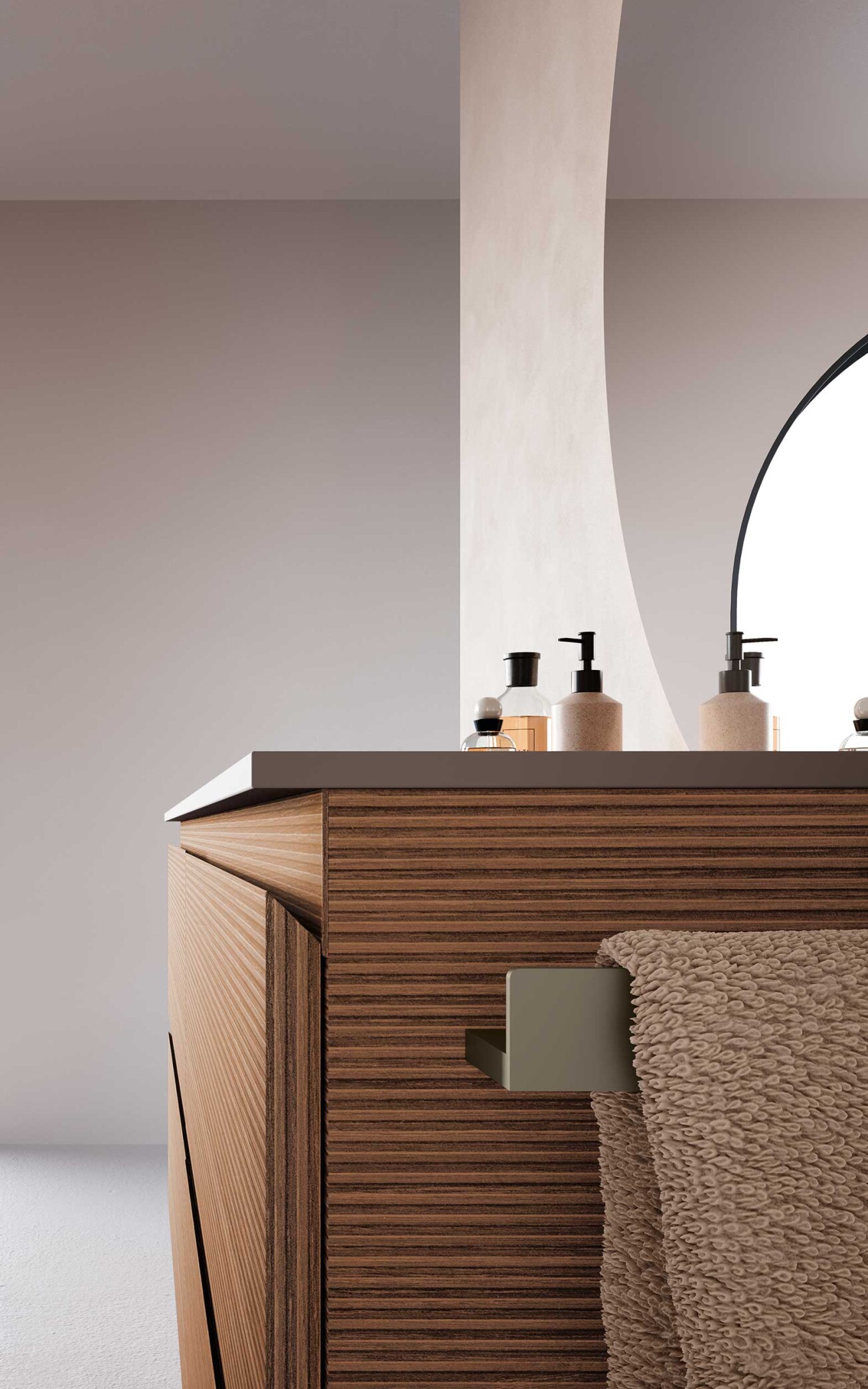
Alongside embossed finishes, the trend toward tactile textures is also expressed through materials that evoke nature: stone, marble, wood, and mineral surfaces. The contemporary bathroom increasingly highlights stone-effect surfaces, textured walls, and materials with an organic appearance, often chosen precisely for their ability to create more enveloping environments that feel like small home spas.
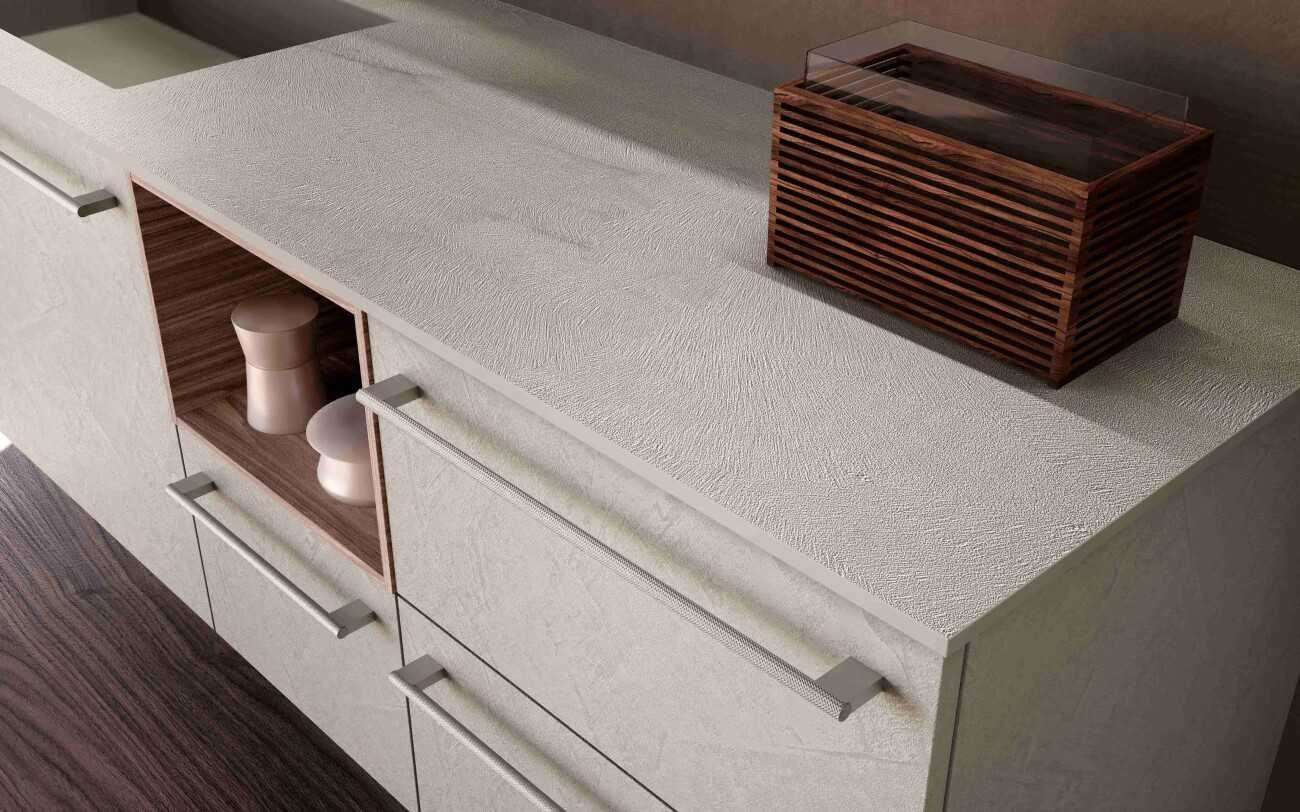
In Azzurra’s catalogs, this sensibility emerges in many ways: in stoneware countertops with deep finishes, in 3D Dekorativo, in wood finishes like Mocha Oak or Eucalyptus, in thick countertops, and in systems that combine different surfaces to create a balanced interplay of materials.
The tactile bathroom is never random
Working with different textures does not simply mean multiplying the effects. Otherwise, the risk is creating a cluttered space. True design quality lies in establishing a hierarchy: choosing a focal surface, one or two supporting finishes, and a few details to complete the picture.
A Canneté front can complement a more compact and uniform countertop. A stone-effect countertop can be enhanced by a wood-grain cabinet or a matte lacquered finish. A minimalist mirror can balance a very textured base unit. The point is not to add, but to harmonize.
A bathroom to see, but also to feel
The trend of furnishing the bathroom with textures and materials that offer different tactile sensations reflects the evolution of contemporary living. It is no longer enough for the bathroom to be tidy and functional: it must also evoke emotion, convey a sense of tangible quality, and leave a lasting impression through its details.
The Azzurra collections interpret this direction with a broad and varied range, where materials, textures, thicknesses, surfaces, and finishes all contribute to creating bathrooms that are richer from a sensory perspective.
For those designing a new bathroom, the advice is simple: view surfaces as living matter, as tools capable of bringing rhythm, warmth, and character to the space. Because today, more than ever, the bathroom is not just meant to be seen. It is also meant to be experienced.