The bathroom continues to be one of the most significant rooms in the home: not just a functional space, but a real living space to be designed with care and sensitivity. The bathroom furnishing trends for 2026 confirm this trend, giving bathroom design an increasingly central architectural importance.
With elegant color palettes, textured materials, and clean lines, the bathroom is transformed into an all-encompassing sensory experience. Let’s take a look at the trends that will guide architects, designers, and planners in the new year.
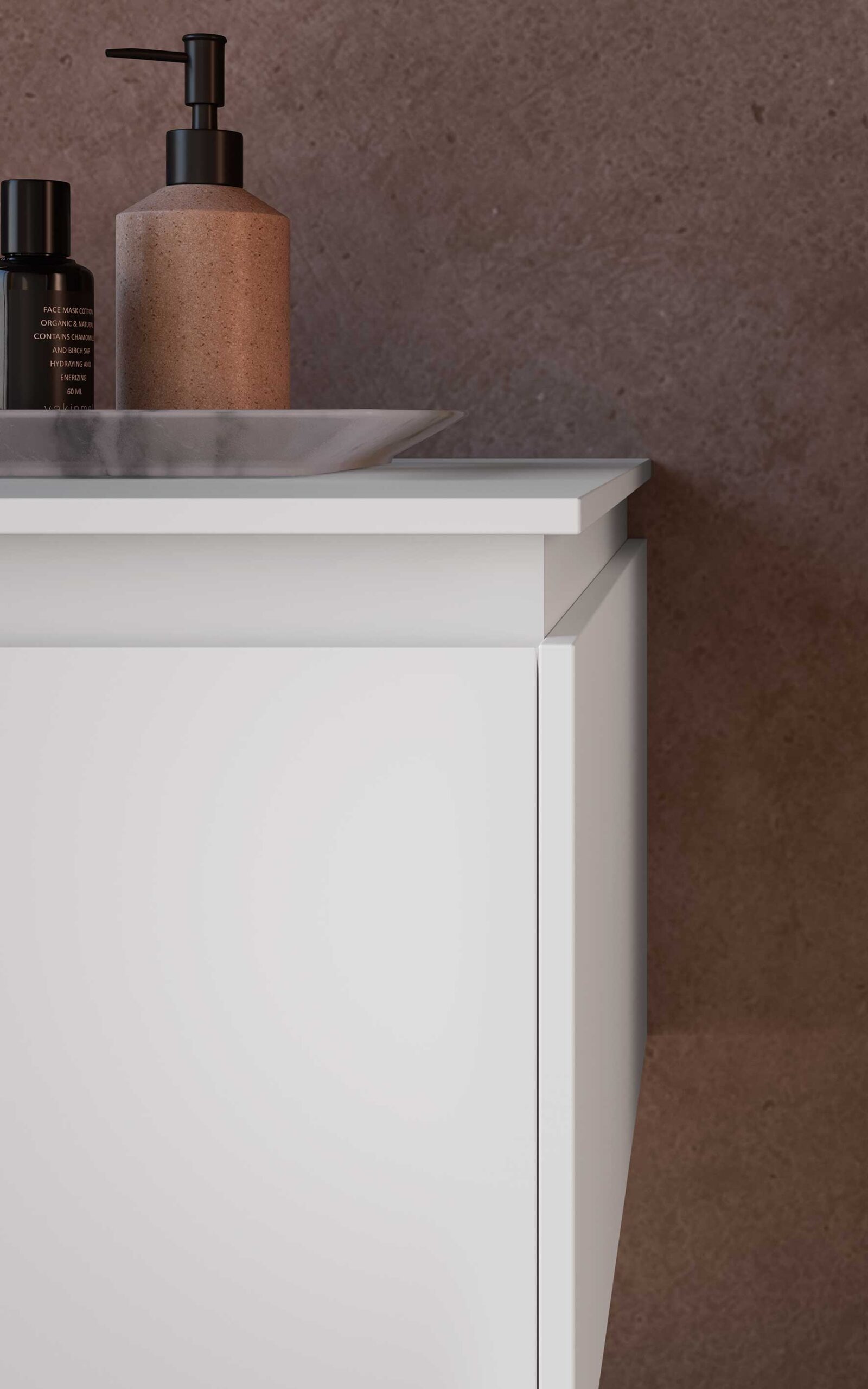
1. The return of white, alongside neutral color palettes
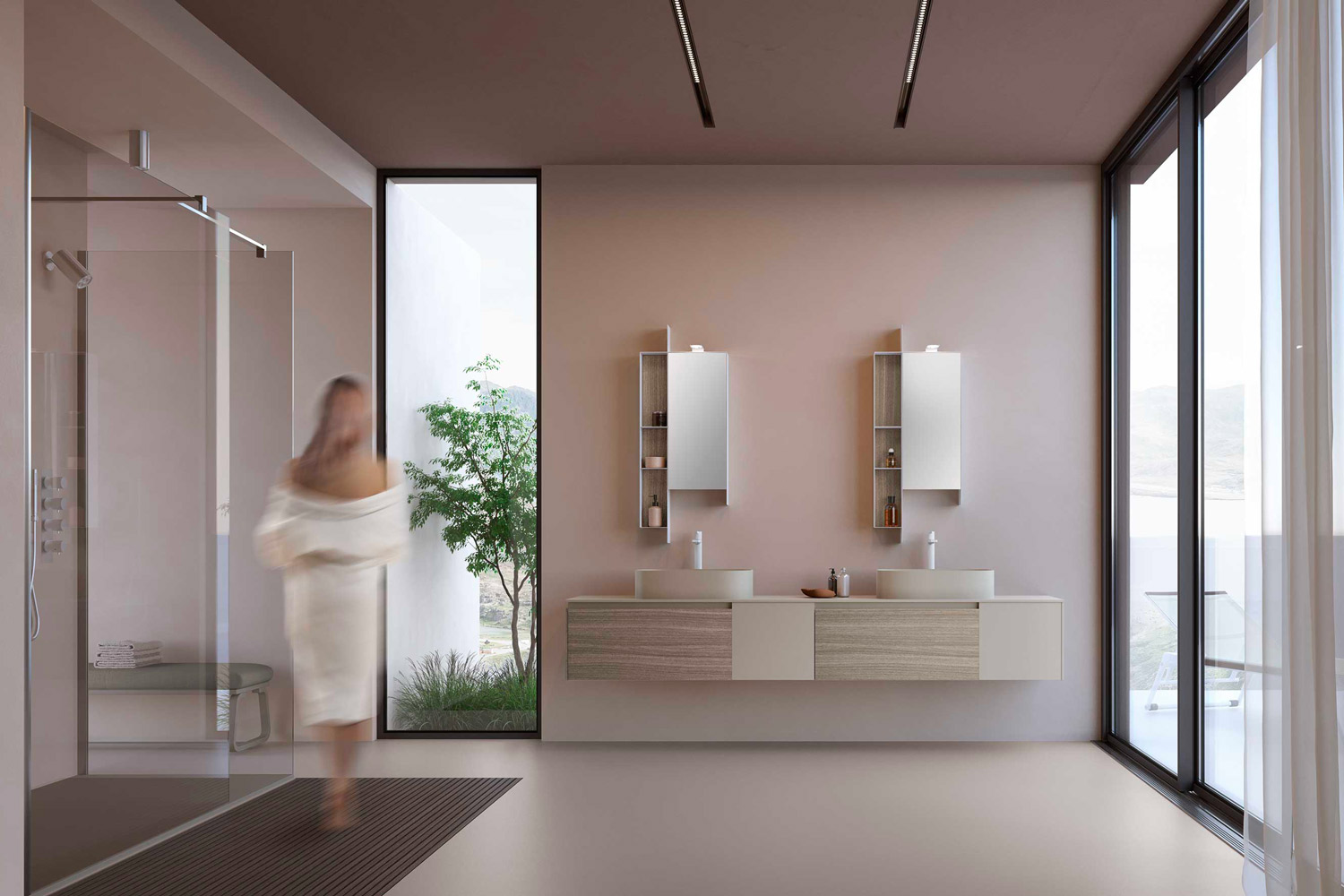
While neutral shades remain central, 2026 also marks a return to white. It is no coincidence that Pantone 2026 has chosen “Cloud Dancer” white, an ethereal and delicate shade that abandons the clinical coldness of pure white in favor of a warmer, more enveloping, and contemporary dimension.
The combination of different shades of white with neutral and natural palettes, such as beige, gray, dove gray, sand, sage, or antique pink, promotes a relaxing visual comfort, determining the aesthetic and emotional impact of the entire room.
White is perfect for minimalist environments, but also as a neutral base for more intense accents, such as colored sinks, metallic elements, or contrasting wood paneling. In bathroom design, it becomes a tool for emphasizing natural light and multiplying the perception of space.
2. Natural materials and tactile textures
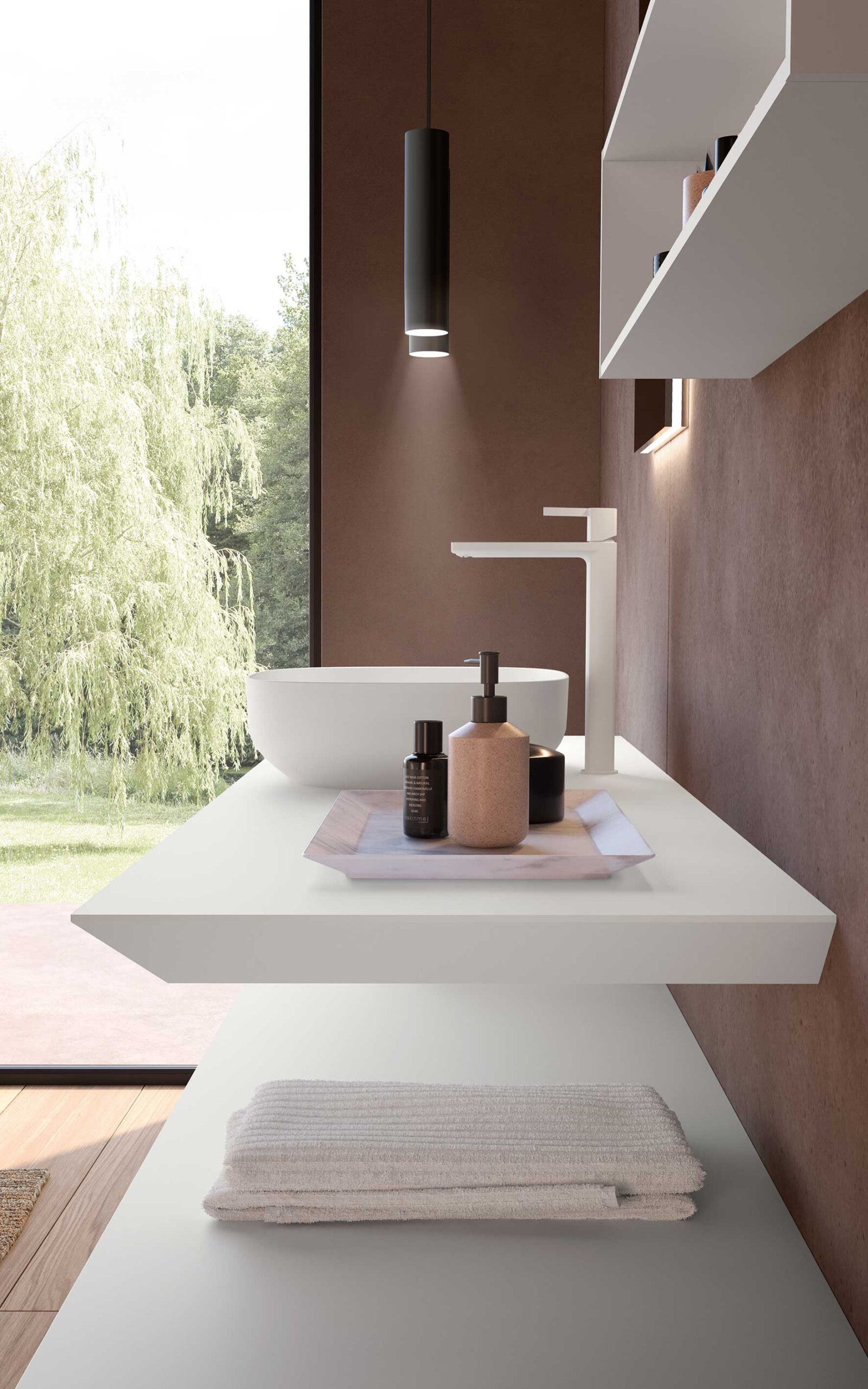
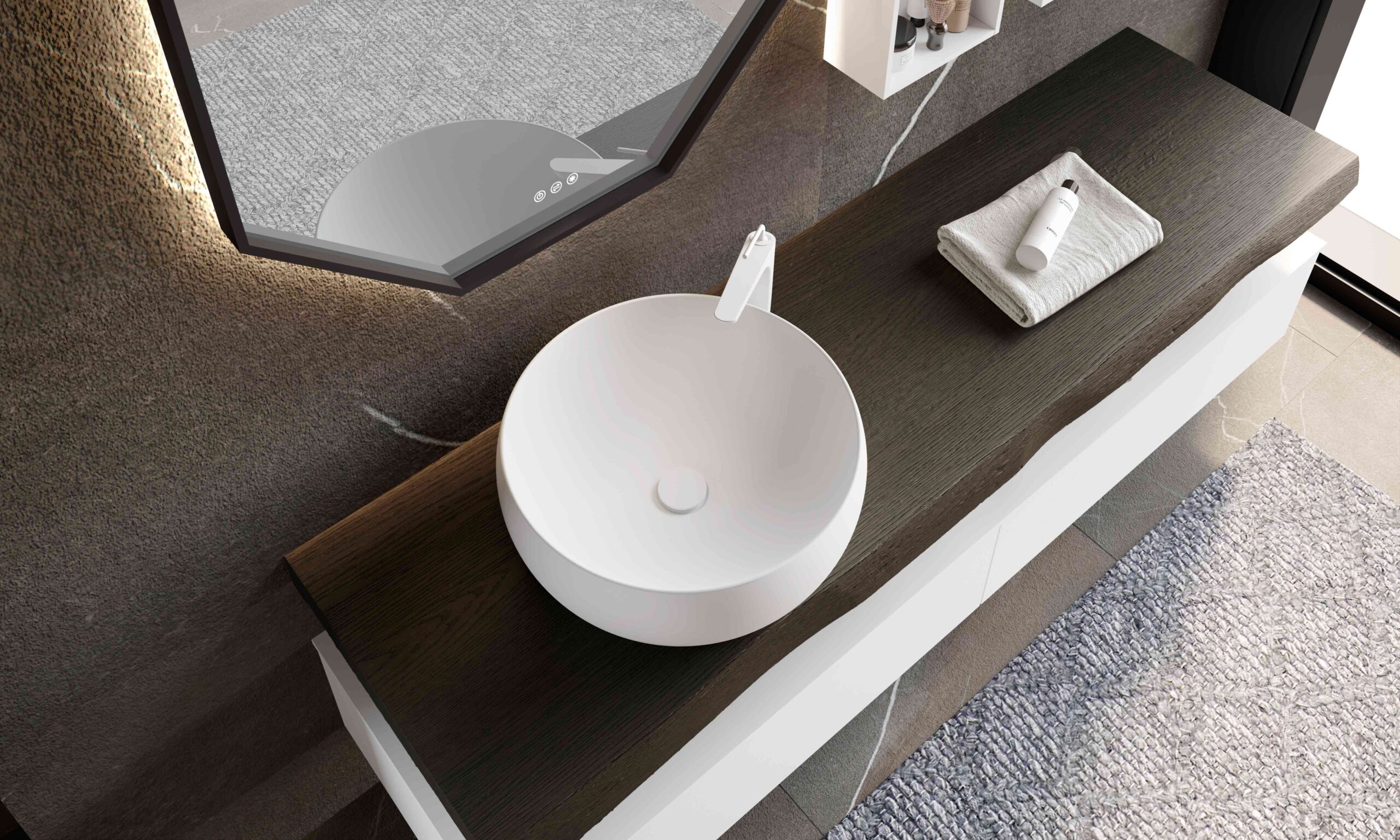
Surfaces that can be “felt” are increasingly sought after: wood, stone, matt effects, or embossed finishes such as Canneté or Rigatino are increasingly used to evoke a connection with nature and matter. Texture is no longer an accessory detail but a design component capable of influencing the perceived atmosphere.
Materials with matte or tactile finishes, combined with soft surfaces and balanced colors, create a sensory dialogue between sight, touch, and light, ideal for bathrooms that want to elevate the everyday experience to a sense of continuous well-being.
3. The bathroom as a personal retreat
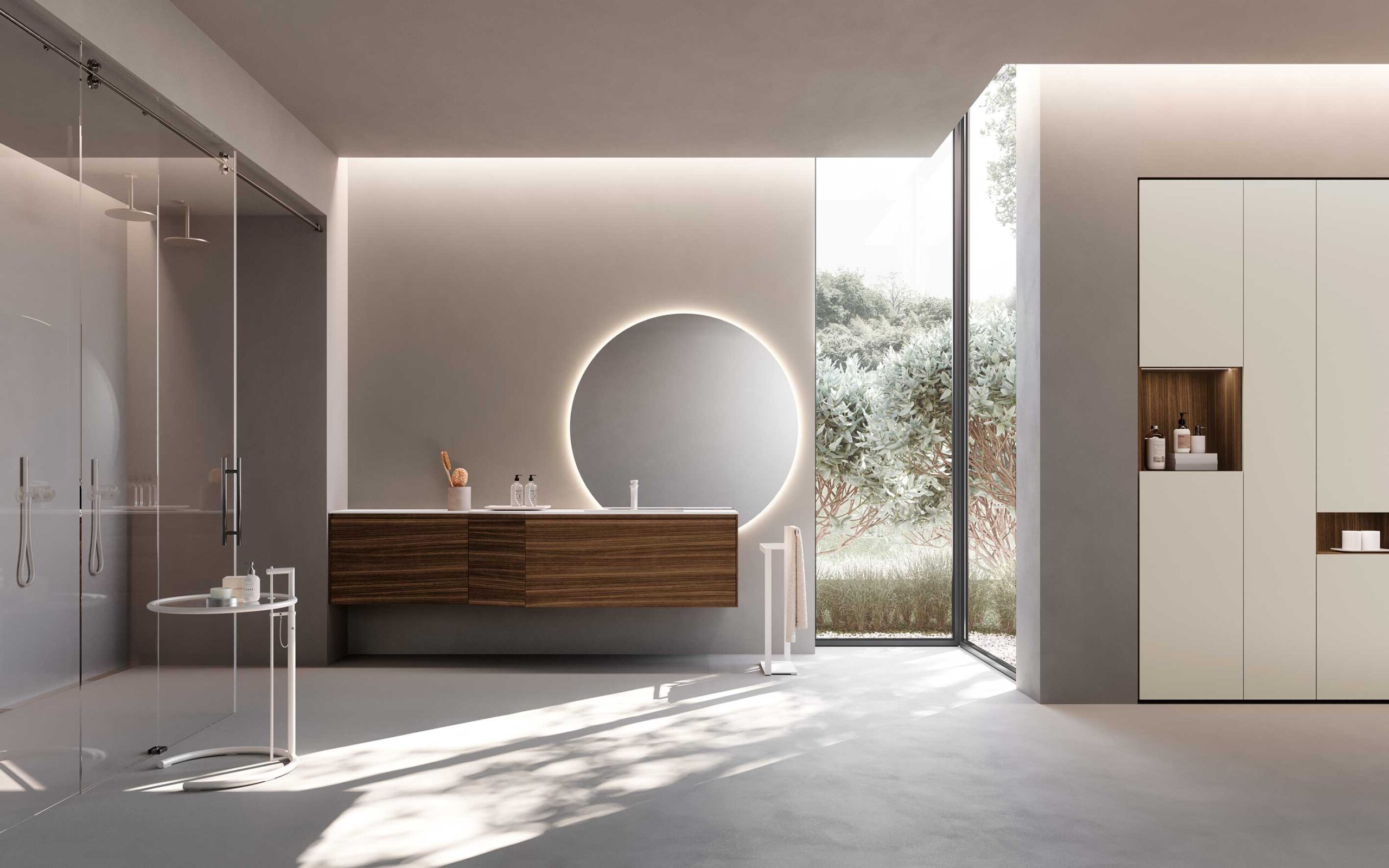
The bathroom continues to be increasingly thought of as a space in which to find relaxation, balance, and comfort, almost like a home spa. Spatial solutions favor fluid layouts, with ample space for showers and bathtubs, careful lighting, and areas dedicated to self-care.
Modern clients do not simply want a functional space, but a place that supports their daily well-being.
The combined use of natural materials, enveloping colors, and integrated technical devices, such as backlit mirrors with adjustable lighting and continuous surfaces without joints, helps to create an environment that is visually relaxing and facilitates everyday living.
4. Tactile minimalism and visual order
Simplicity of design remains central to the balance between aesthetics and function. Minimalism is evolving towards a clean visual order, in which every element has a clear purpose: continuous surfaces, hidden compartments, and modular units help to keep the bathroom tidy.
This visual requirement has a practical application in everyday use: resistant materials, easy-to-clean finishes, and efficient storage systems are all elements that meet the demand for durability and ease of use.
5. Personalization and creativity
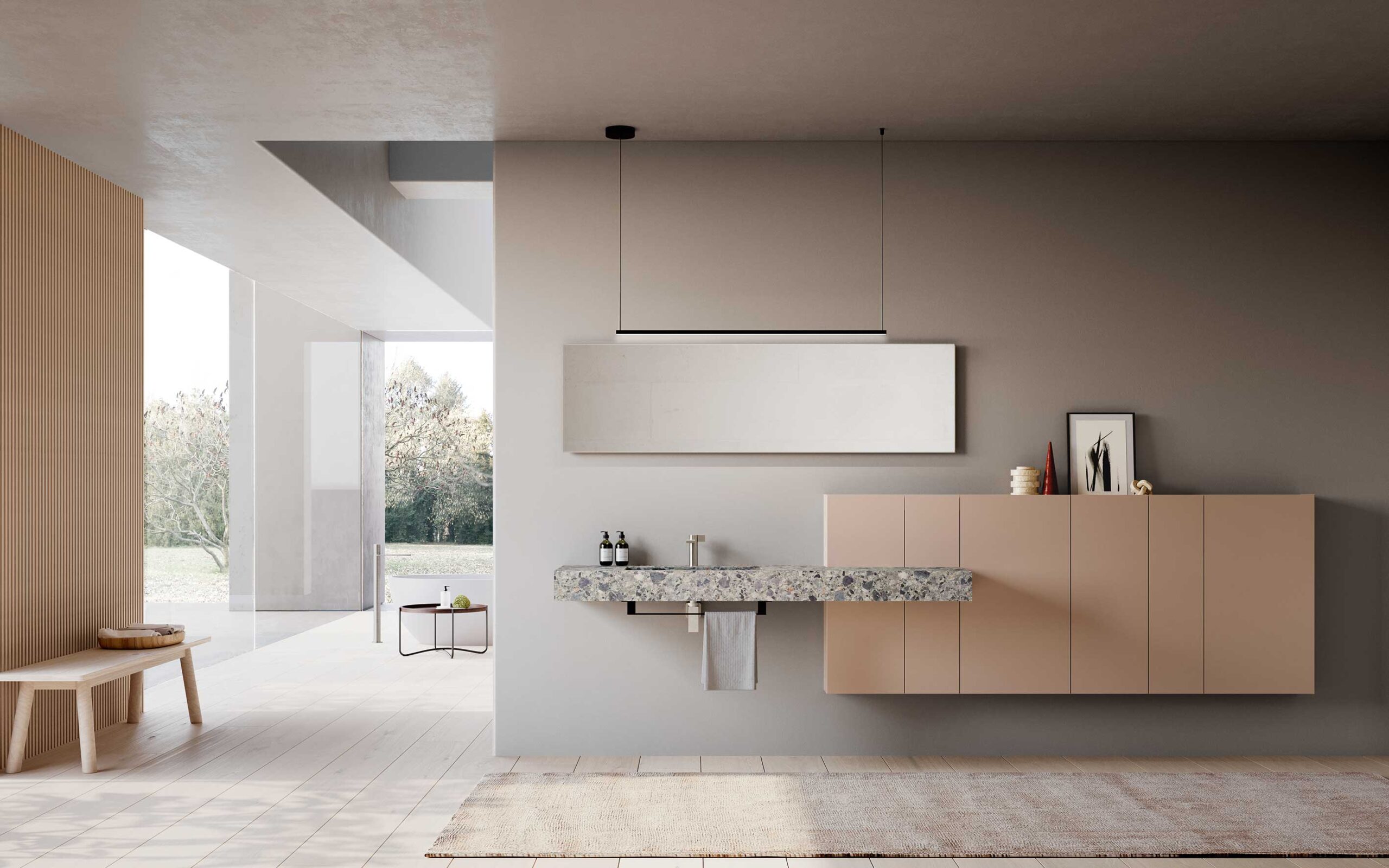
Despite the prevalence of natural palettes, the bathroom of 2026 also embraces bolder trends. Patterns, expressive tiles, or brighter colored details can coexist with the overall cleanliness of the design, as long as they are balanced by sober surfaces and impeccable visual organization.
In this sense, the use of color is not an end in itself but becomes part of a design narrative: a colorful sink or wall units distributed across the wall like works of art can help add a personal creative touch to the design without disrupting the overall coherence.
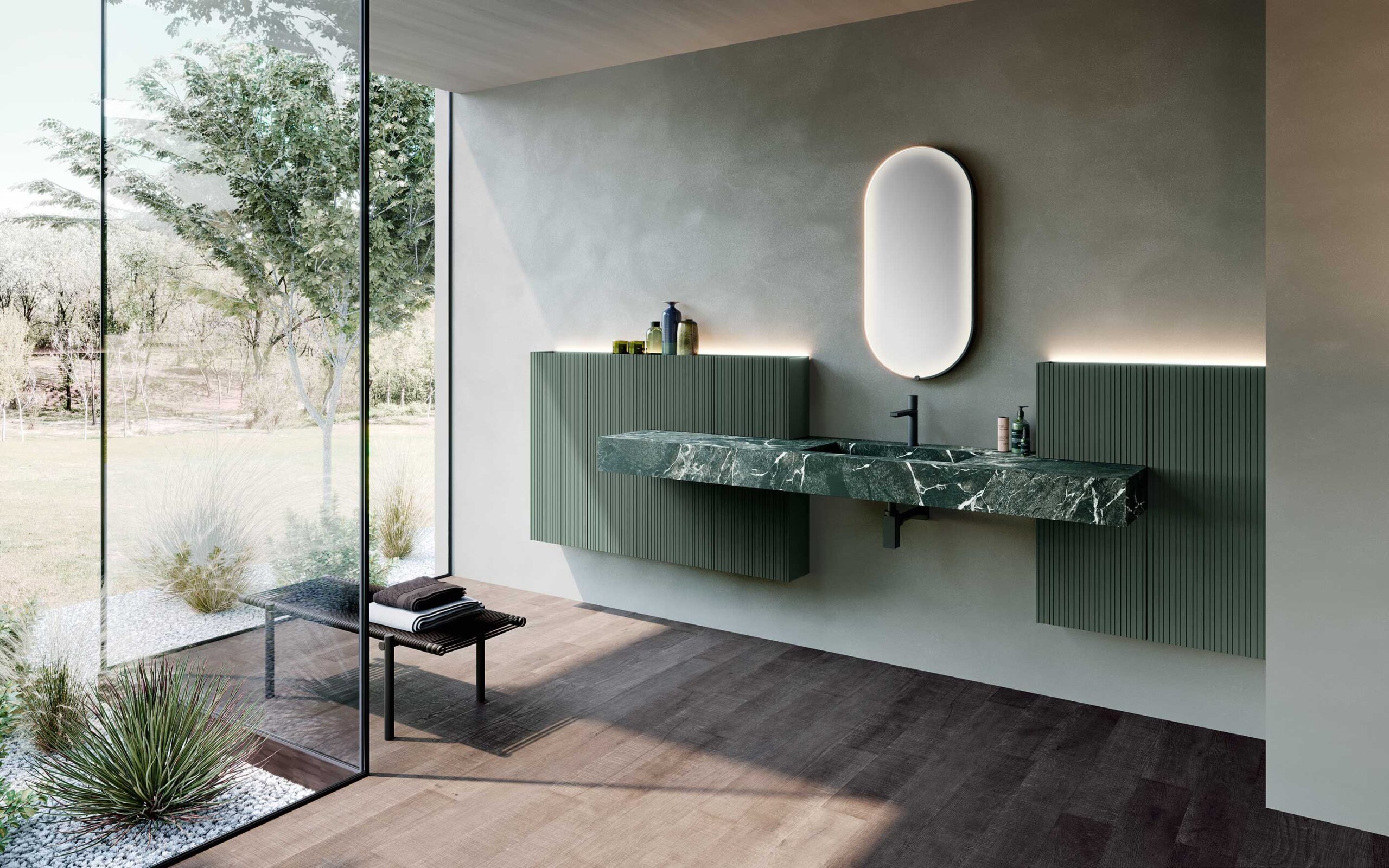
The solutions offered by Azzurra fit perfectly into this evolving context, providing tools for designing bathrooms that combine aesthetics, technology, and durability.